Mendoza- Part 3: Day To Day Life
(This is a long post- feel free to just enjoy the photos!)
It took a few weeks, but we did finally get our rhythm here. Eric returned to work after 1 week of intensive Spanish classes. He has still managed to take daily morning Spanish lessons before returning home to work from home for the remainder of the day, and picking up the girls from school at 5pm.
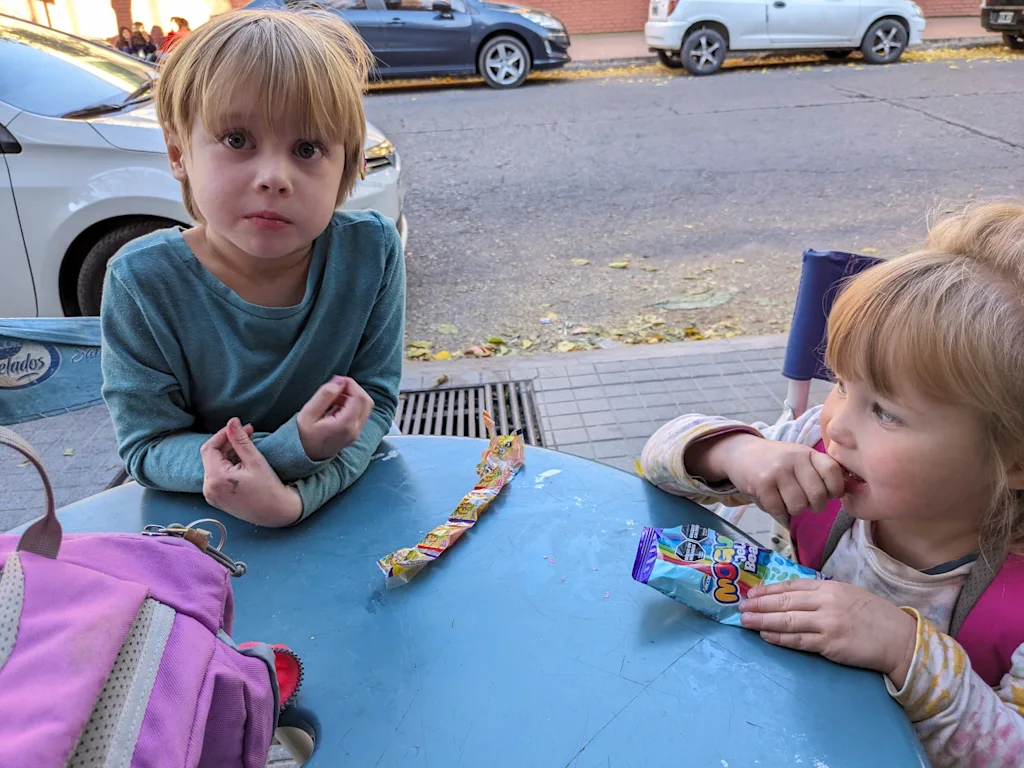
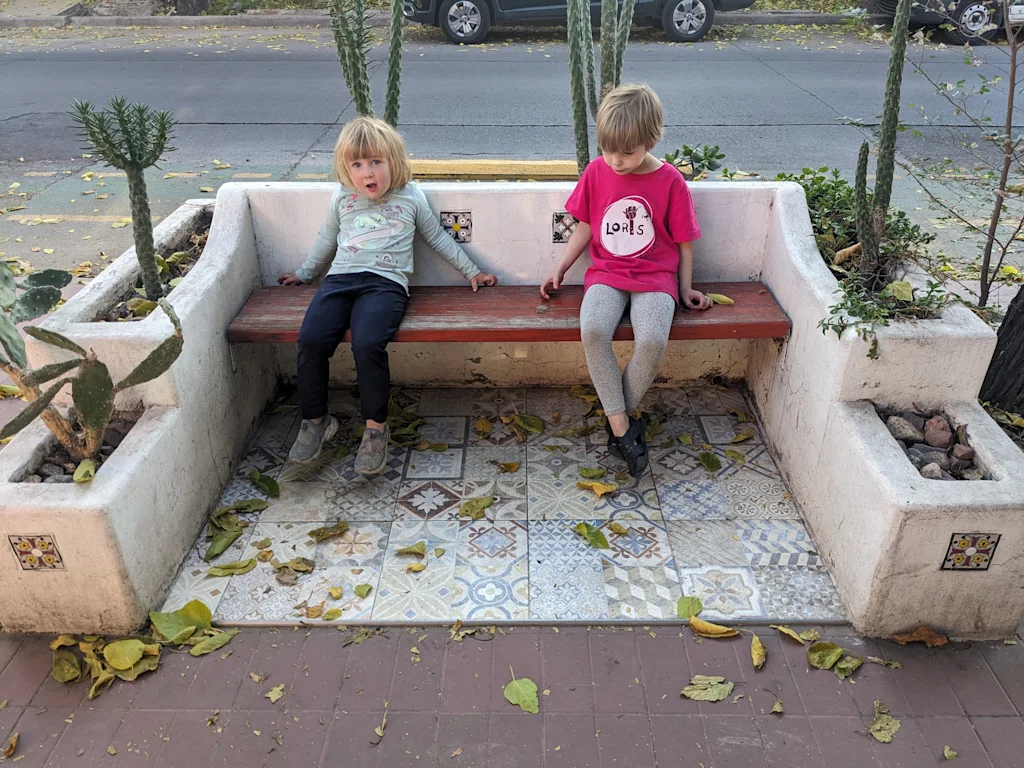
(Above: the girls enjoy a small candy on their walk home from school- many minimarts will have a small table or two out front to enjoy your snacks or drinks. Nell and Mae love stopping at this "cactus bench" to and from school)
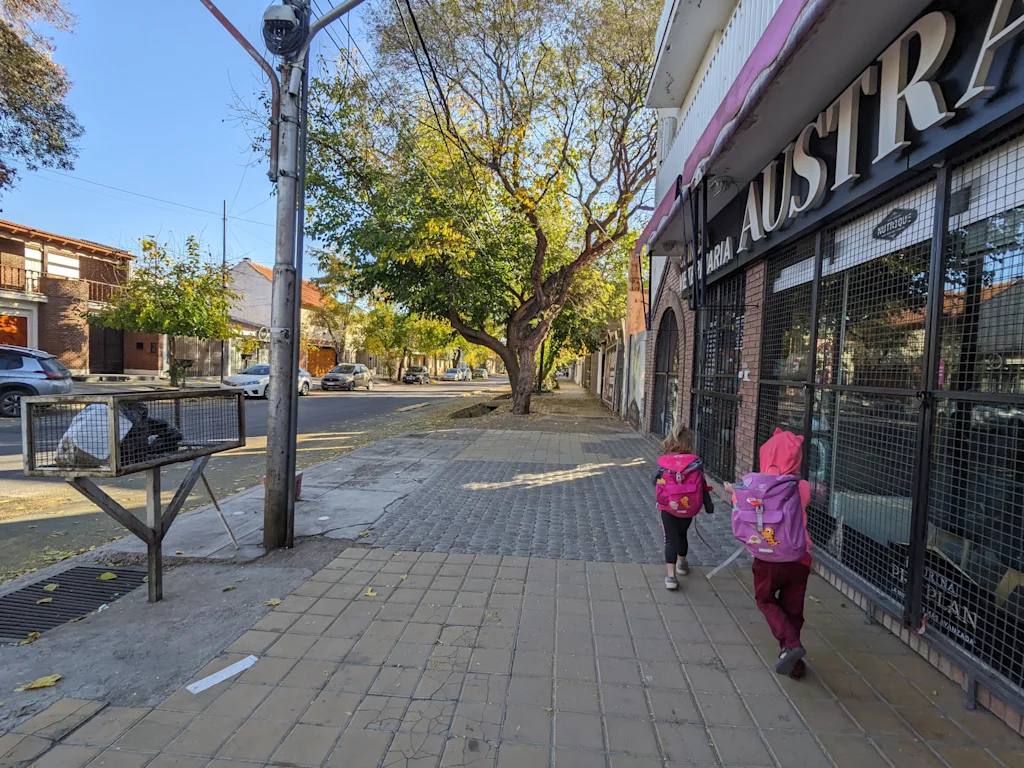
I took over primary responsibility of the girls in the morning, getting ready for school and drop off. The walk to school was about 15 minutes from our first Airbnb and then increased to 25 minutes from the second location we've been staying in. Since I am unemployed and have more comfort speaking Spanish I've also been primarily responsible for other household work- meal planning (though we share in cooking), making sure we have enough cash on hand, laundry, maintaining some semblance of organization in our home (rentals that don't always consider the needs of a long term family stay- i.e. where do we store all the girls art supplies?), as well as activity and social gathering planning.
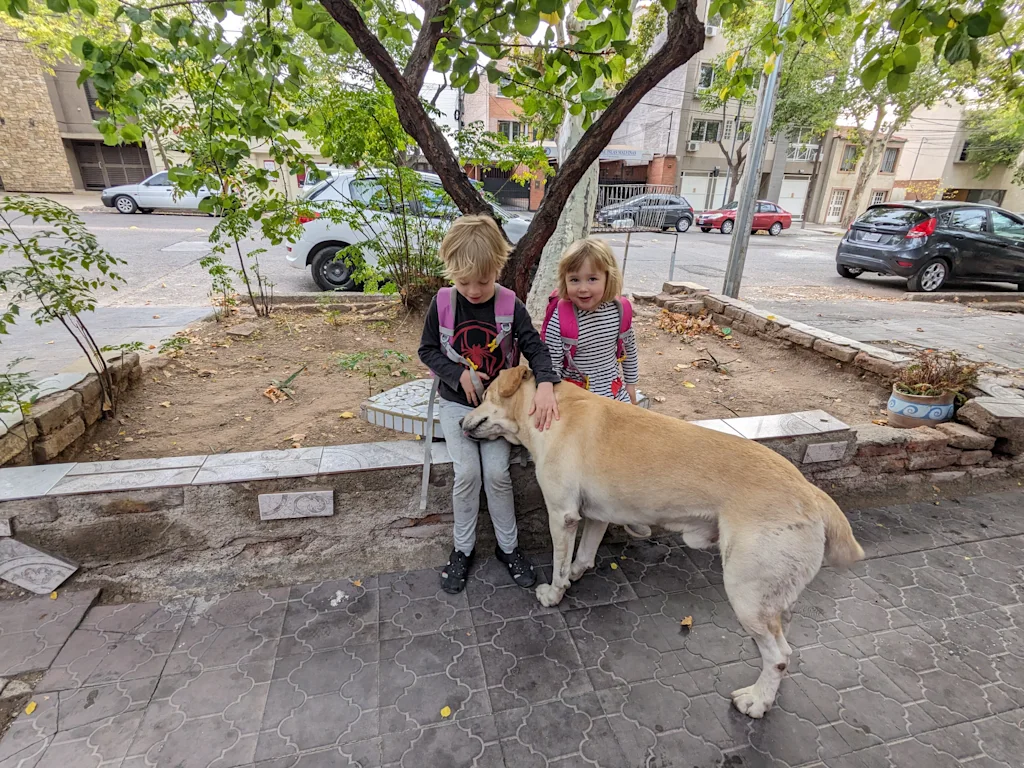
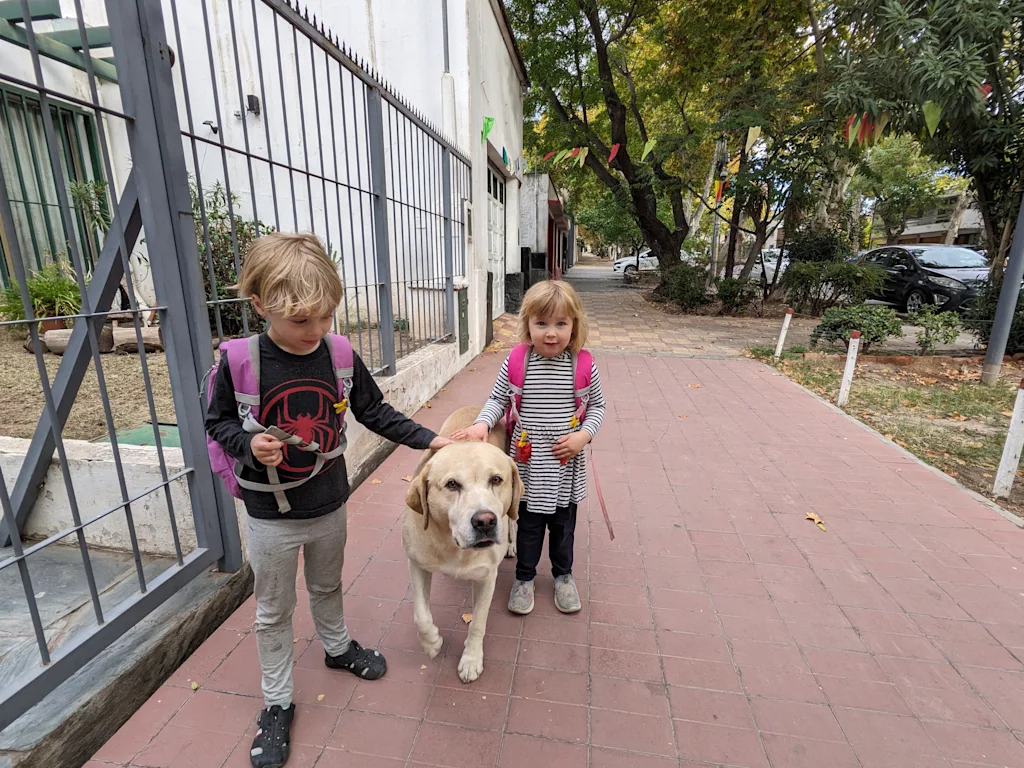
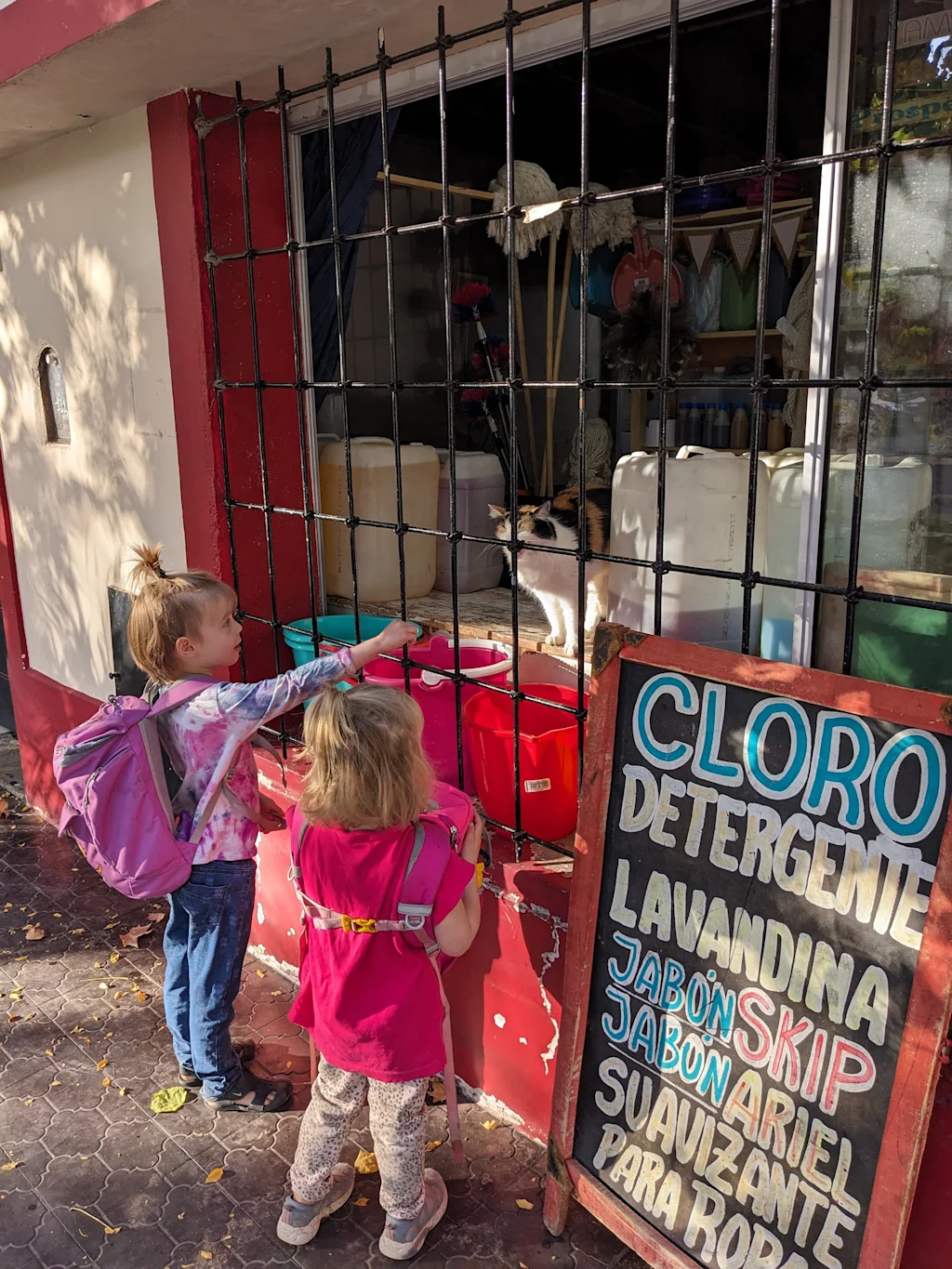
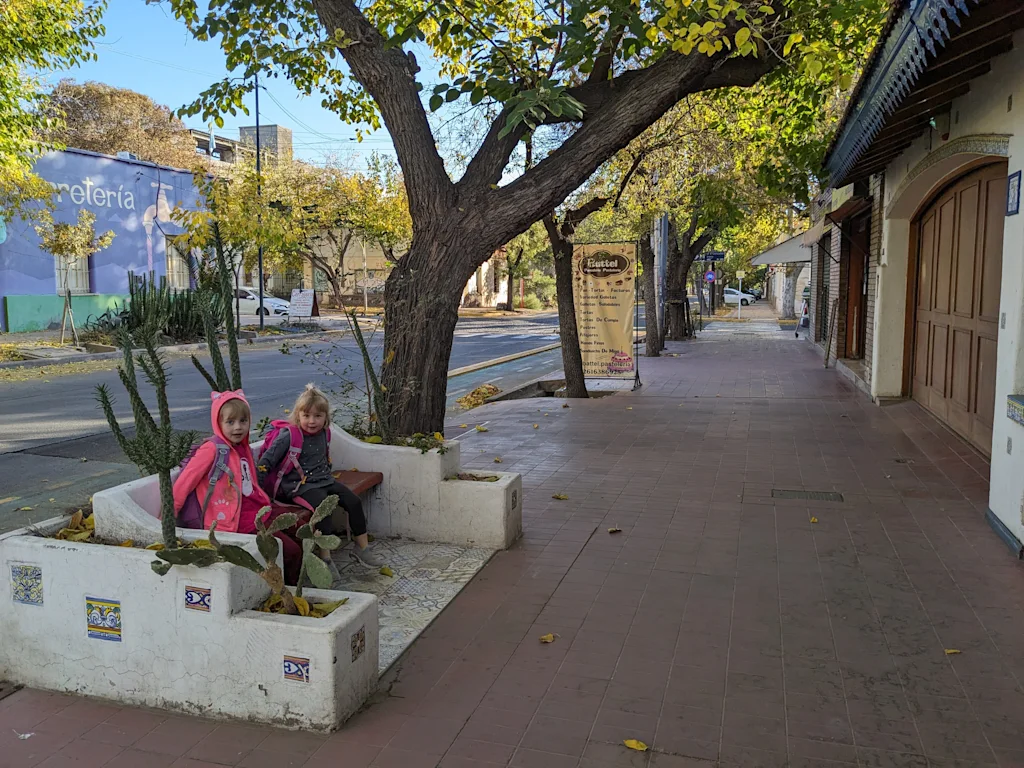
(Above: the girls love seeing "Ronco" the dog as they near school in the mornings, sometimes they get to pet the kitty that lives with Ronco at the small in-home cleaning goods store too. More cactus bench)
Meals: It took me a while to figure out meal planning and where exactly to get what. There is one very large grocery store about 0.5 mile from the first place we stayed and several blocks closer to the second place. I primarily go there for granola, yogurt, milk and sliced bread. But it doesn't have the best produce or cold-cuts selection. Fortunately, there are many nearby corner stores and verdulerias (vegetable and fruit stands) which make getting some essentials pretty easy, and they tend to have better produce. There is also a large central market further into city center that has some harder to find items: walnuts, dried fruits, salmon, and spices. I found a bakery a little beyond Eric's Spanish school that makes excellent sourdough, but only if you get there before they are sold out. And we have also incorporated a once weekly meal of fresh-made pasta and sauce from a shop near the girls school. Argentina is known for it's fresh pasta, a delicious influence from its significant history of Italian immigrants. There is a separate butcher that has better quality sausage, cold cuts, and hard cheese. And then we were glad to be able to find a source for whole bean coffee. Eric and I are both kind of picky about coffee and have our own travel grinder, but often when we've been travelling it's easier to find pre-ground or powdered coffee. But we did find a small shop that sells whole bean coffee from around Latin America (at a premium)- and I don't mind making the side walking trip there every 2-3 weeks to pick out a new bag. It's worth having that delicious morning cup!
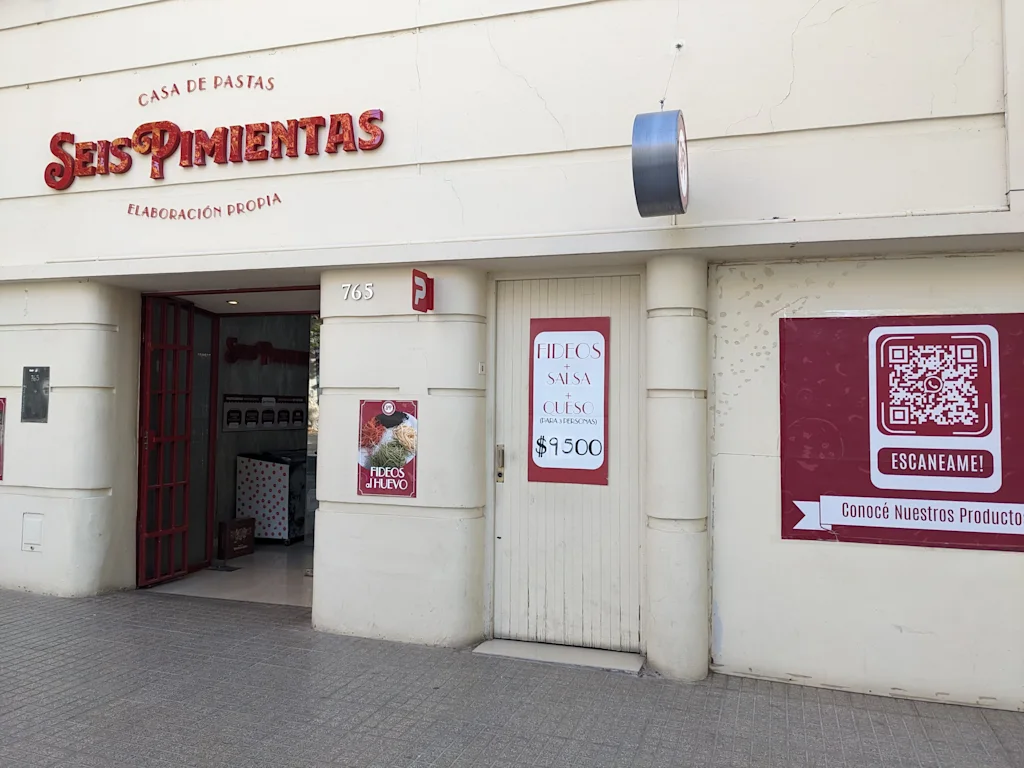
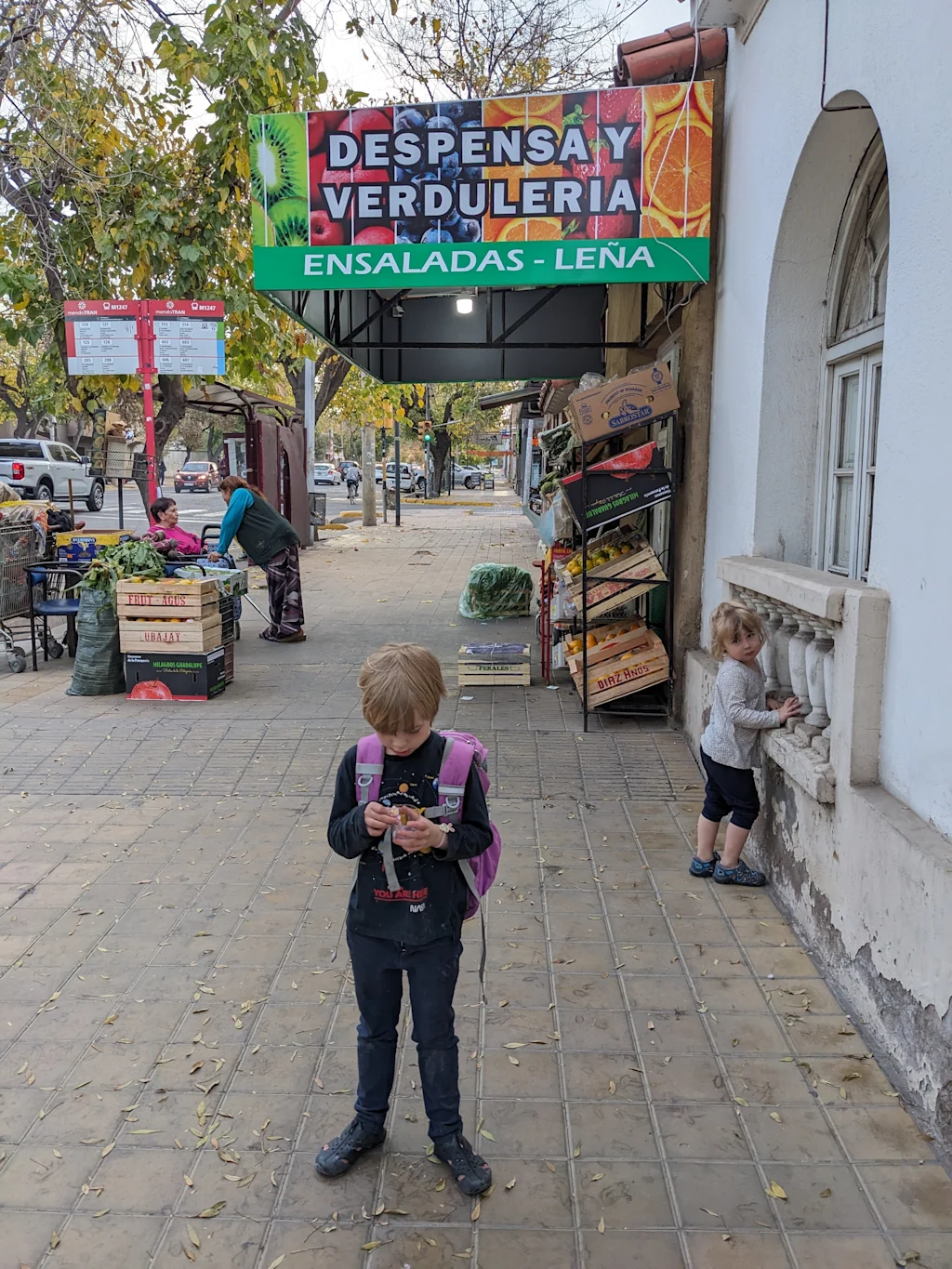
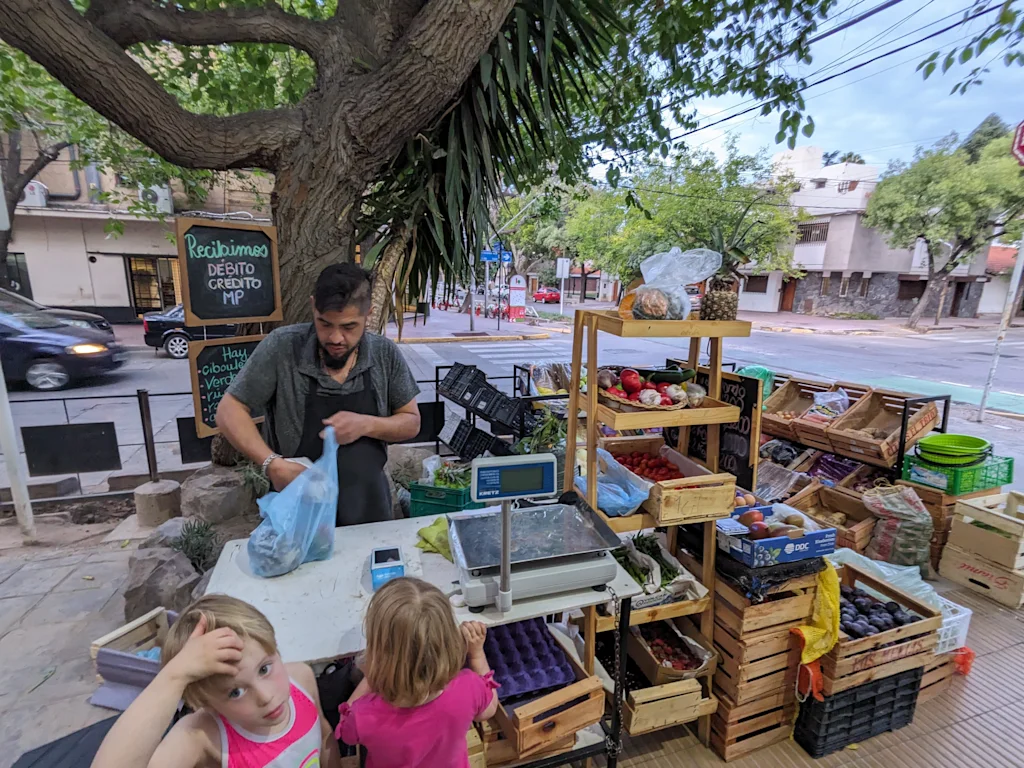
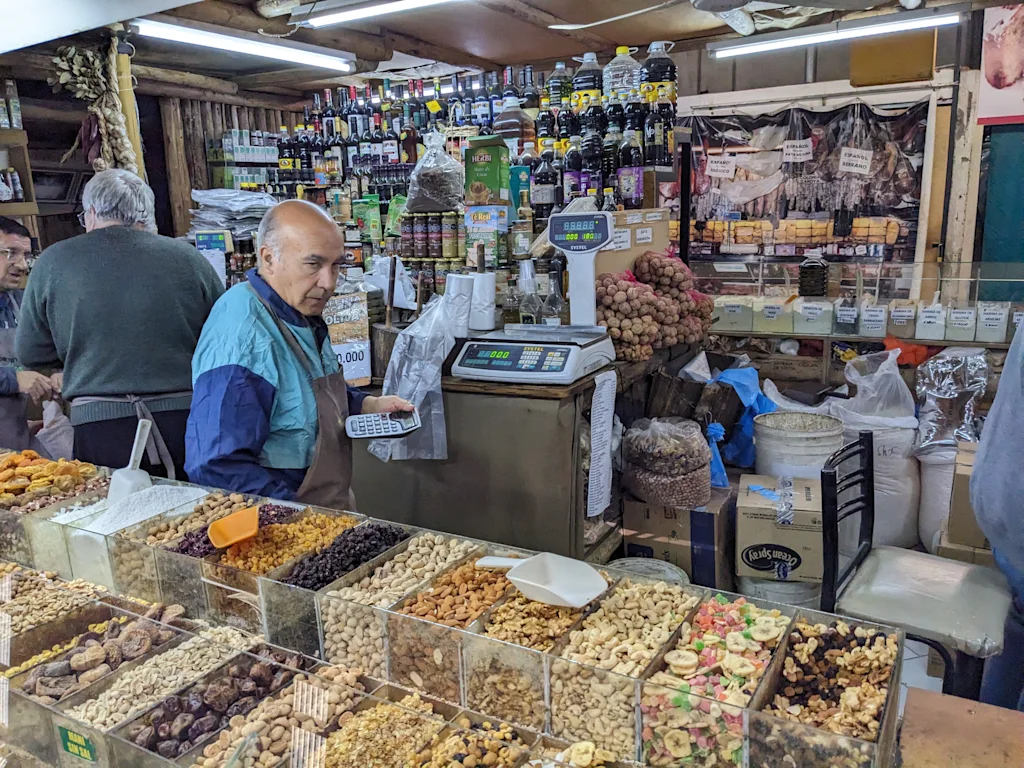
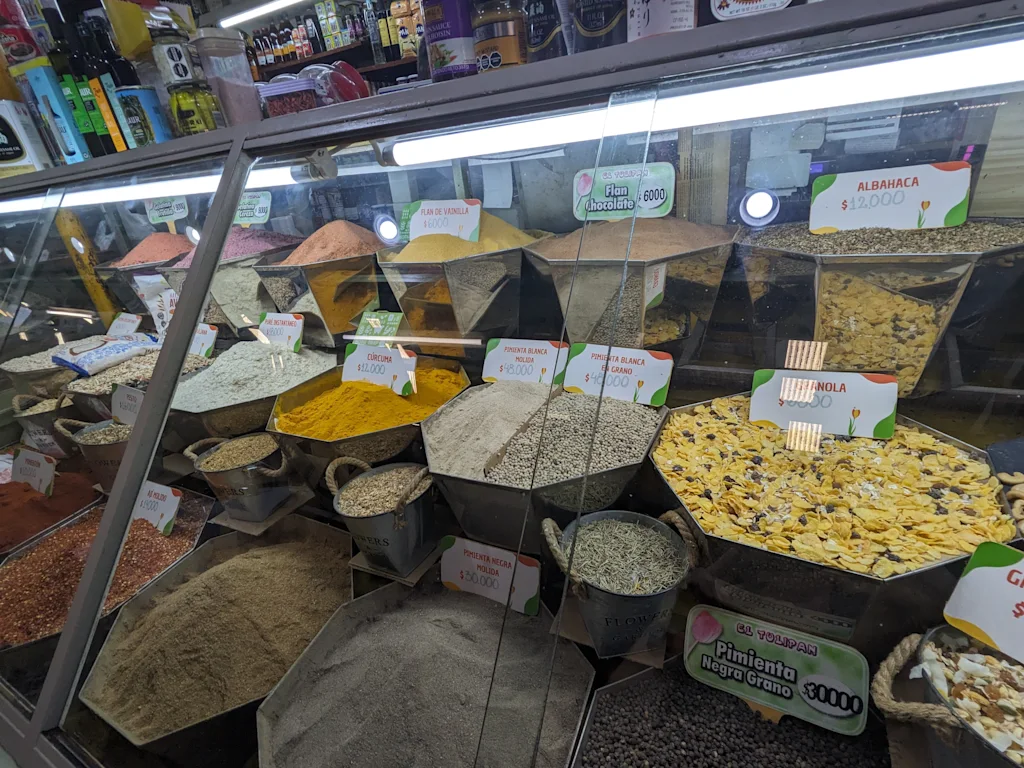
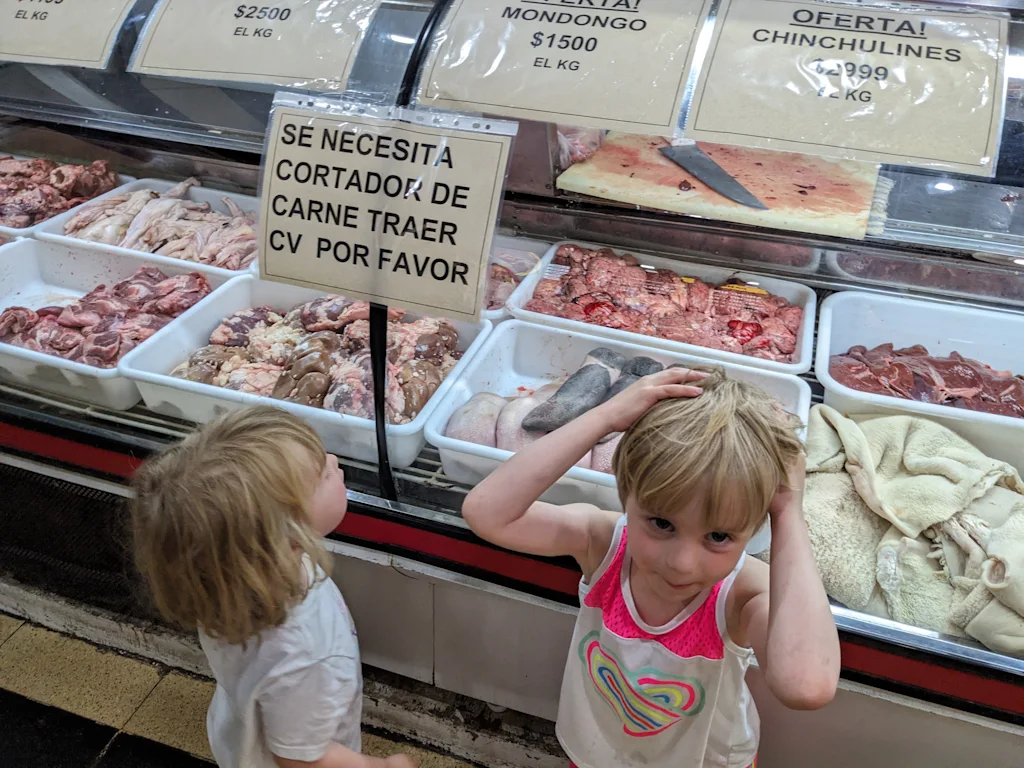
(Above: our favorite take and cook hand made pasta and sauce spot, a couple different Verdulerias we frequent, images from the central market), including showing Nell surprised to see cow brain for the first time in a butcher shop- along with many other parts we're not used to seeing).
So with grocery items so dispersed, no vehicle, and limited carrying capacity- just the act of gathering groceries takes a lot more time throughout the week than living in Burlington. We are, however, very grateful that in Argentina (at least everywhere we have been) the tap water is potable, so we have not had to worry about that level of planning with meal preparations! This easy access to clean tap water was one of the many factors in why we chose to live in Argentina with our young kids, something unfortunately you can't count on in all countries in Latin America. Most days I end up doing some amount of grocery shopping, depending on which stores I am near and what we are low on, but also time of day. Many shops and stores close from around 1-5pm daily for a "siesta", so shopping needs to be planned earlier in the day, or later in the evening.
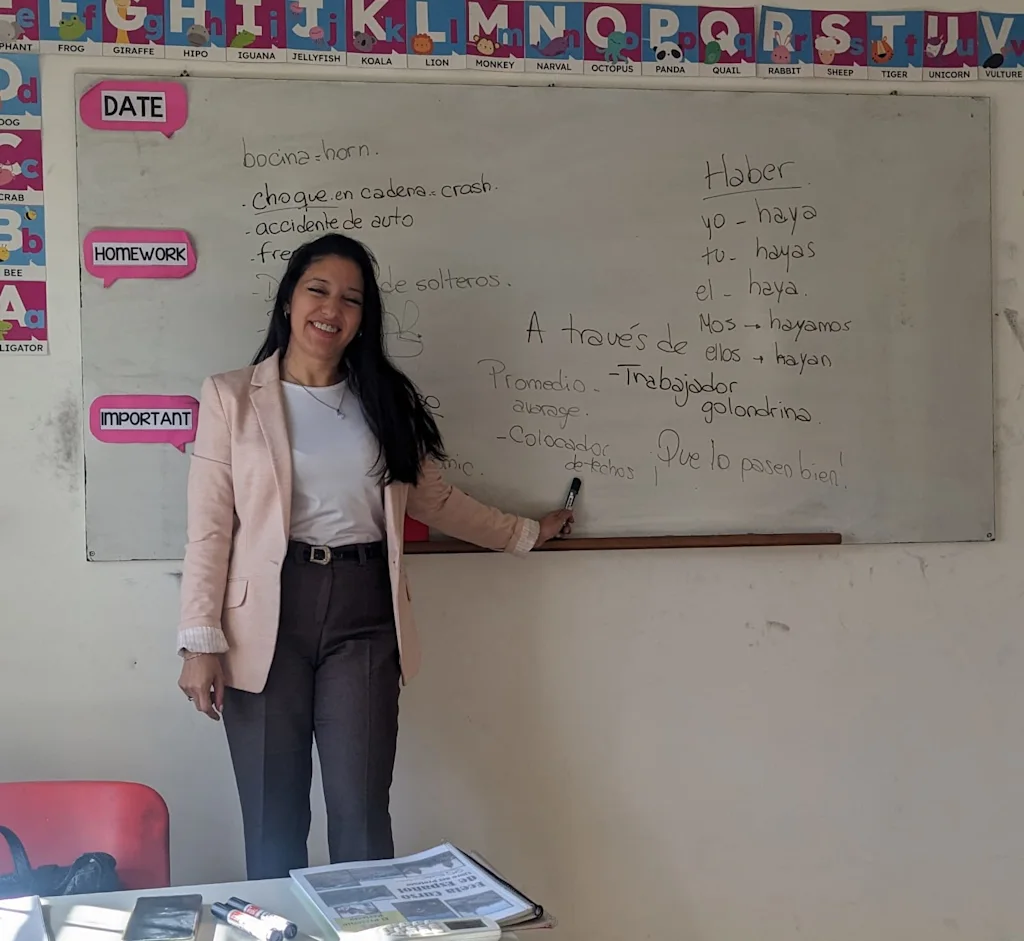
As our Spanish instructor, Sol, tells us- Argentina suffers from the problem of "mucho movimiento" (lots of movement). The traditional siesta is not actually used a nap time, but rather divides many working peoples' days into 2 shifts, which doubles the amount of time spend commuting, and often means people work separate jobs in the morning than they do in the afternoon. It also means that work for many people ends around 8 or 9pm. Dinner ends up being around 9-10pm and bedtime around midnight. I've asked fellow parents here about their schedules with young kids- many have one or another partner who doesn't work the afternoon shift or a family member who helps watch their kid after pick up at 5pm. Families have a "merienda" (snack) around this time along with the traditional Mate (local caffeinated green tea) and then run errands or do after school activities with the kids until their dinner time around 9pm. Many even young kiddos here don't have bedtime until after 10pm. However, kids at our school are actually lucky in that school goes until 5pm. Public school typically runs from 8-1pm or so. Parents may be able to meet their kids at home or pick up from school during the siesta time period, but then many will have to go back to work around 4-5pm, making it challenging for how to care for kids during those afternoon and evening hours. Again, we are lucky to have one working parent and be able to stick to typical work hours for Eric, while we're here.
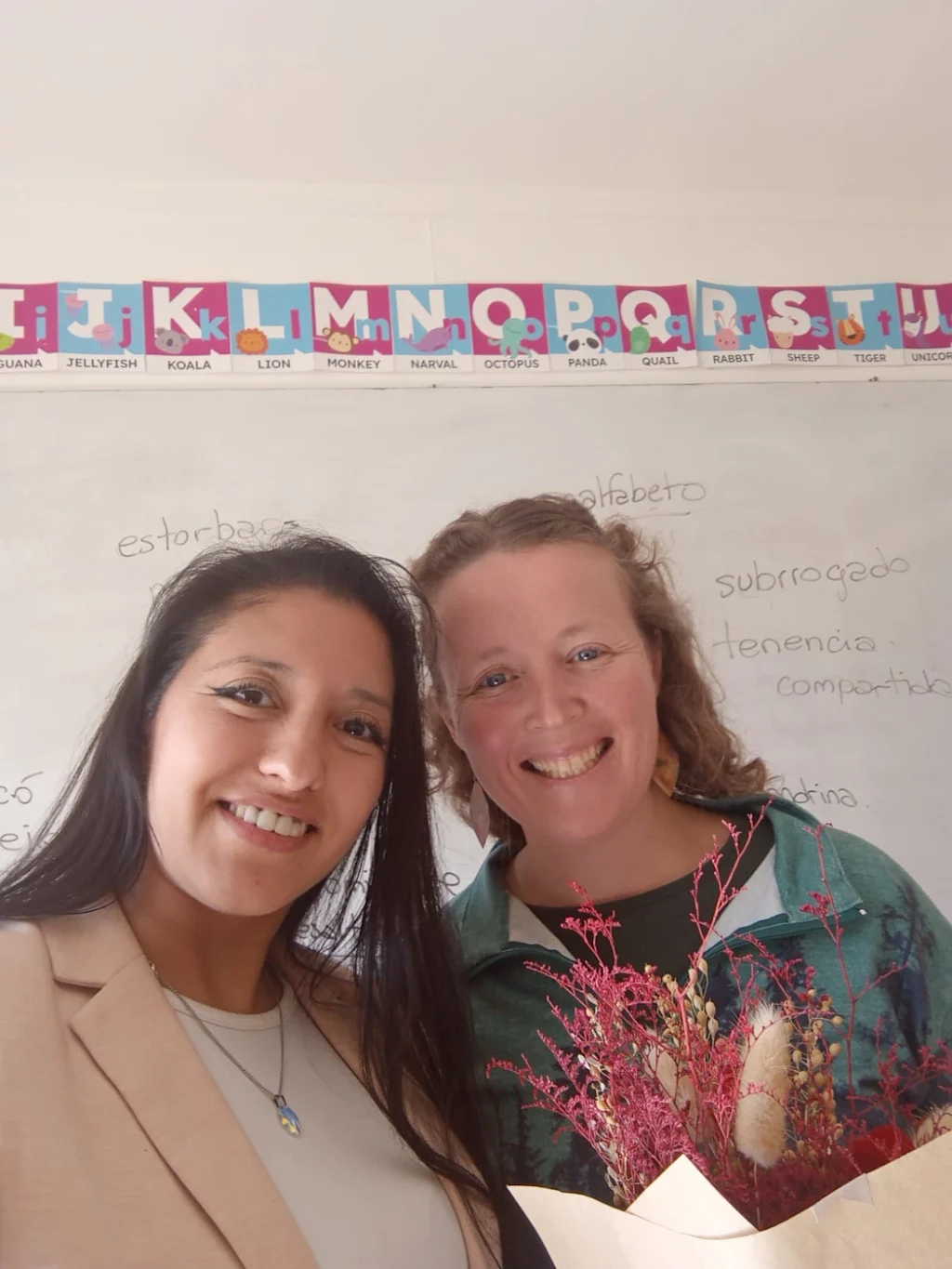
Money: Argentina has a long history of economic instability and inflation. Eric and I both learned a little more about this from our Spanish school instuctor, Sol. As she describes it, what we are currently experiencing in the US with the change of administration to Trump and the drastic upending of many government programs and economic structure, is actually pretty typical for Argentina. She describes that with each new presidency (every 4 years unless there is a re-election, although it was only in the 1980s that they last had a dictator) there are drastic changes to government, social services and economic policy. For reasons that are more complex than I understand, one of the consequences over the years has been a very unstable economy and drastic rates of inflation. In December 2023 alone inflation was 25.5%! This is an interesting overview article lending some perspective on the inflationary crisis here, which has improved significantly over the past year, but still is in another league entirely to the US.
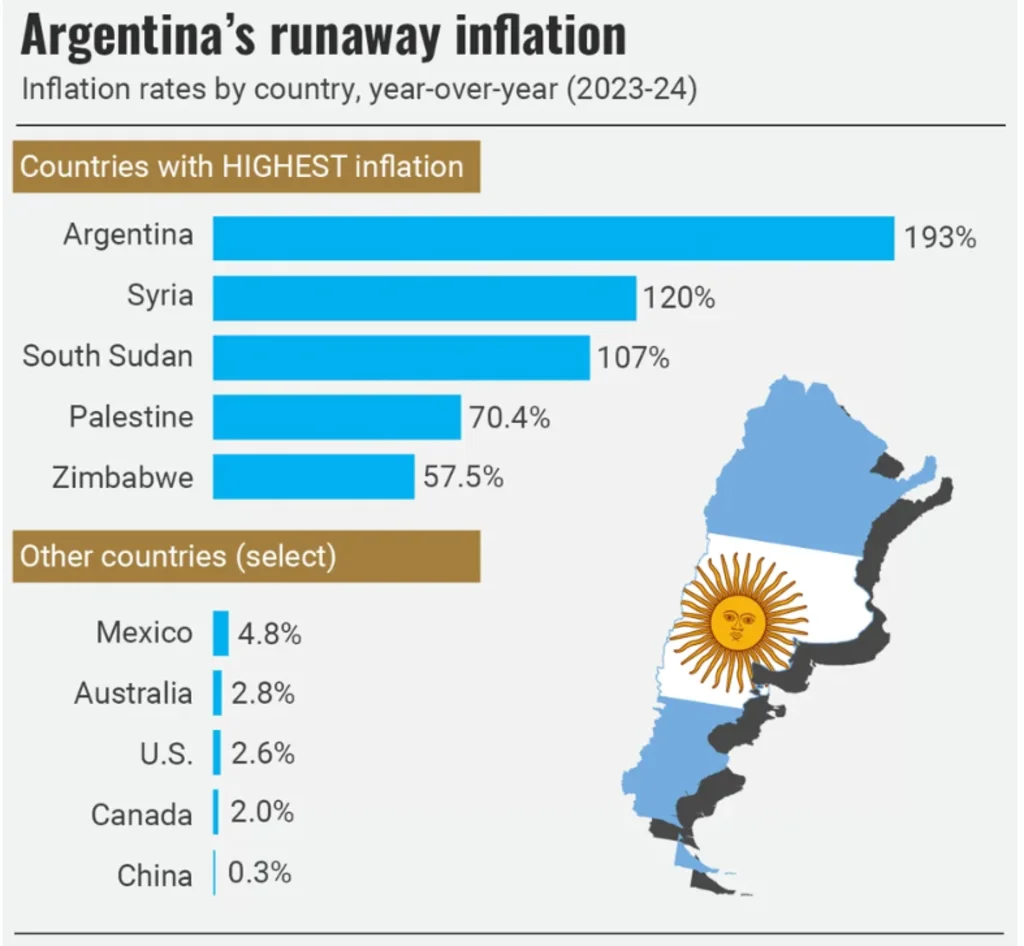
Even while we've been here, the girls school tuition rose by about 5%, something the school tries to do on just a quarterly, rather than monthly basis. This means we went from paying about $570 per month for both girls to $600 a month for both girls- very affordable for us, but only the highest earners can afford this here- where the average income is about $400-500 USD per month. News reports show that Argentina's poverty rate was greater than 50% and that this year with some stabilization of inflation has fallen now to something more like 37%. Sol our Spanish instructor, in her 30s with a young family of her own, feels like its the worst economy she has seen in her lifetime. She also shared how few organized social services there are. I hoped to find an organization working with the houseless or providing meals that we could donate to and was not successful- the few organizations that came up in a search either only had a phone number, or only accepted Mercado Pago- similar to Venmo- a money transfer app that everyone uses here, but that doesn't allow enrollment without a local resident ID number. These organizations are few and far between and seem to only accept local support and cash.
Sol has described how most people still don't use the formal banking system out of historical fear of lost savings, or because of difficulties in getting an account. Here the US dollar is still highly favored for savings with people literally keeping USD cash stashed in their homes which feels safer to them than banks (which suffered a horrible crisis in the early 2000s where many, many people lost all their wealth and money). Savings in pesos makes no practical sense as rapid inflation devalues their currency so quickly. Even while we've been here we have been able to see the production of a new 10,000 and 20,000 peso bank notes (equal to approximately $8 and $16 USD). This makes carrying around currency much easier- my first payment to the school in $1,000 peso notes felt like an illicit deal with literal stacks of cash. It's hard to imagine that just 37 years ago in 1992 when the new Argentinian peso was created, 1 peso=1 USD, and now it's more like $1,100 pesos =1 USD!
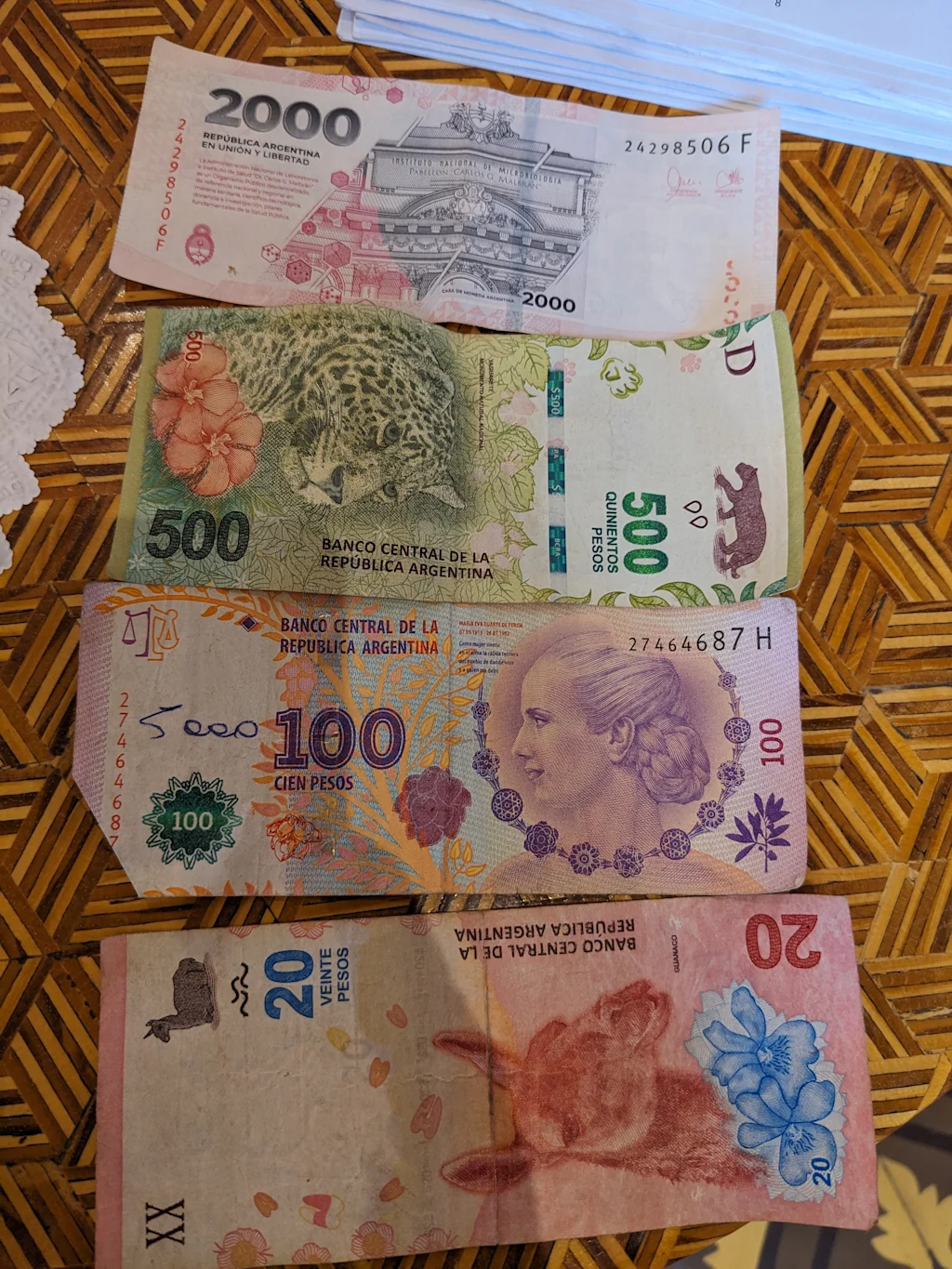
So what does this mean for us? It means our income FAR exceeds that of most locals. However, Airbnb hosts have figured out the most tourists can afford higher prices so our rental here is way out of range for what any local would pay. That being said we are in one of the nicest areas of Central Mendoza and our apartment is quite spacious, but I would not call it super luxurious (by American standards at least). We pay about $55 USD per night for our 3 bedroom 1.5 bath place. Our Spanish instructor says a smaller 2 bedroom apartment in our general neighborhood usually goes for more like $350 USD per month. We have also noticed, that in general many goods here seem to have very inflated prices compared to wages for example:
- Small (flimsy) tupperware container for sandwich: $5,000 pesos ($4 USD)
- Brunch breakfast: $14,000 pesos ($11 USD)
- T-shirt: $25,000 pesos ($21 USD)
It's harder to find cheap, international or Chinese goods as well. Cheap, plastic kids toys are ridiculously expensive (like $8 USD for a wind up toy!) and higher quality goods (like a new toddler bike) appear of fine quality but are also ridiculously expensive- like $200 USD! If you are earning less than $5,000 pesos ($4 USD) per hour you simply cannot afford the cost of many goods. And on the flip side services are seemingly very cheap, reflecting very low wages- we've paid about $5,000-$7,000 pesos per hour for babysitting and $4,000 pesos per hour for cleaning help once weekly. We pay our Spanish instructor significantly more (a portion goes to the school itself and again, as catering to tourists is able to charge higher rates)- about $20,000 per hour.
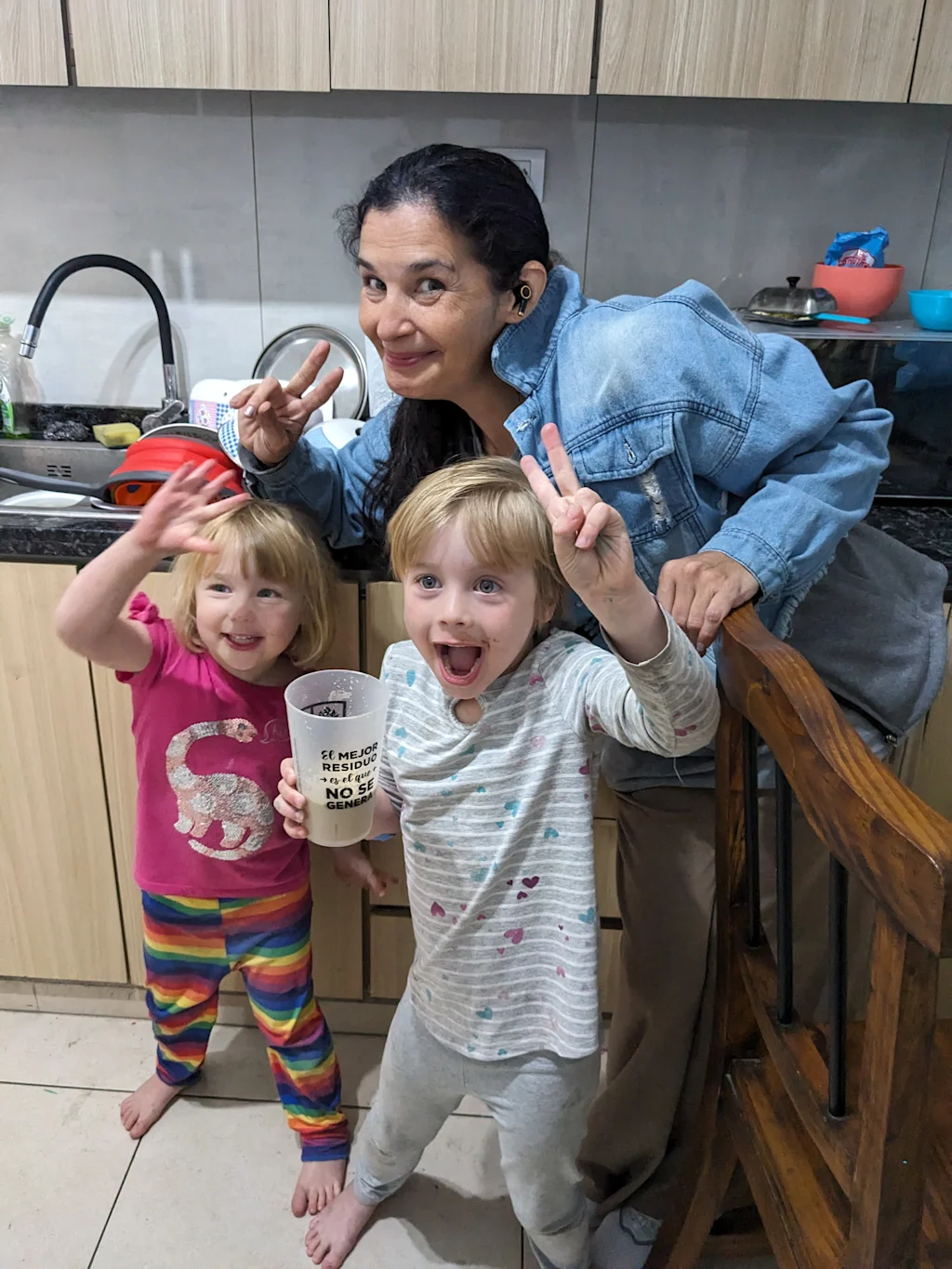
(Our awesome babysitter, Natalia, who would come for 2-3 hours most weekends)
For the most part, we've been able to pay for things with our credit card, which allows us one of the best exchange rates. But many small businesses and stores prefer cash or the mercado pago app (which we can't get). The best way we've found to get cash out is to actually wire money to ourselves via Western Union, which if you get the quantity and fees just right can work out to about a 4% charge in transfer fees. If we go to a bank, for example (even though we have an awesome Schwab account which has worked really well in the past reimbursing ATM fees even abroad), the maximum you can withdraw at a time can be $60,000 and then you get fees of like 20-25% at the time of withdrawal, which are not reimbursed- that was totally not going to work for us. Fortunately, at least here in Mendoza the Western Union withdrawal system has been fast and reliable with a really good exchange rate and the lowest fees we could find.
Cleaning: The good thing about Airbnb's is that they generally provide you with some basic cleaning supplies and we have intentionally booked spots with washing machines to make our lives easier. We also asked our first rental landlord who they used for help with cleaning, and have ended up hiring Jessica once a week to help us out. Her rate of pay is incredibly affordable, and we so appreciate having a deeper clean weekly: floors, kitchen, bathrooms. She also appreciates having a bit more work and Kate enjoys chatting with her a bit each visit.
In Mendoza garbage collection is most days of the week. When we first got to Argentina we found the small baskets lining streets to be odd- but now understand this is the standard trash collection mechanism. People use small garbage bags and take them out on a daily basis for collection in the late evening. Our first home had gotten rid of its basket though and asked us to hang our garbage bags on a hook instead, which was fine, until some dogs figured out how to get in to it!
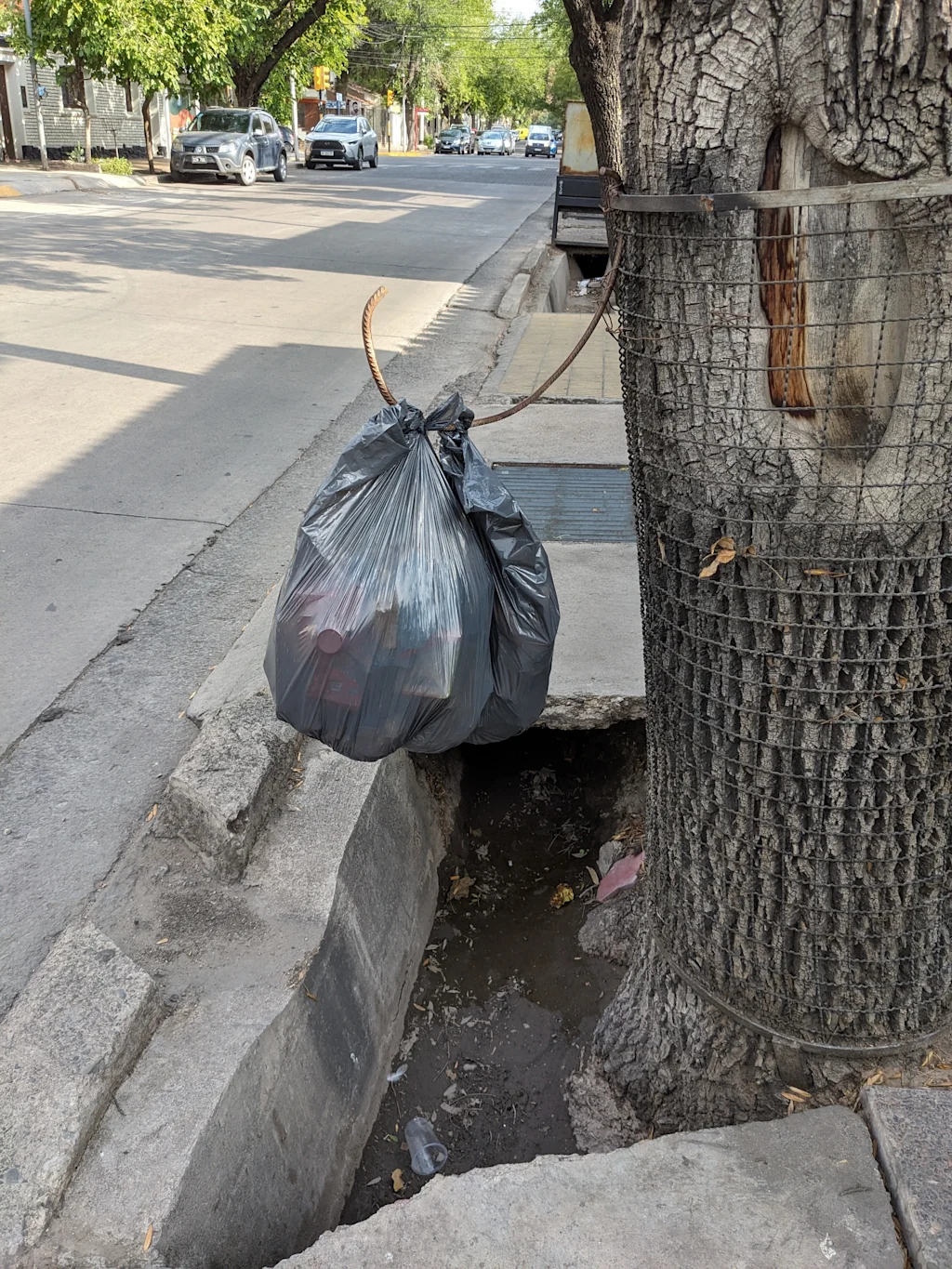
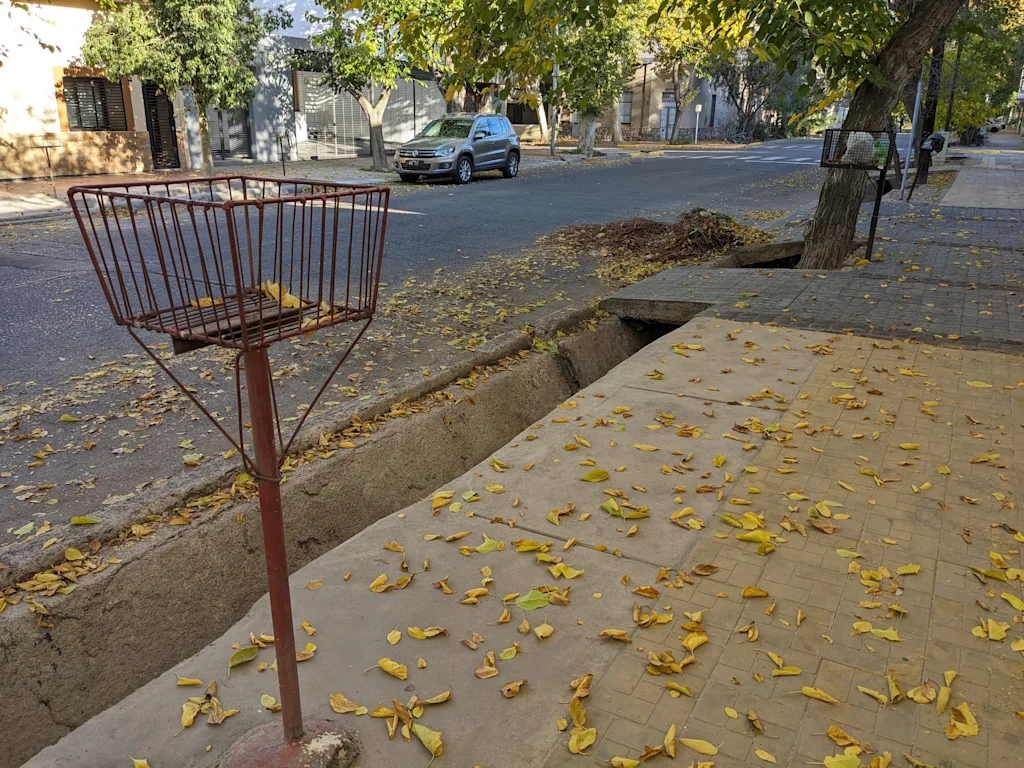
(Above: putting garbage out via a hook, vs the standard baskets that line the streets for individual properties)
Many bathrooms in Mendoza have a bidet as well- which is a nice hygiene measure, and it's expected that you won't throw toilet paper in the toilet to protect the more fragile sewage system. Bathrooms also often have a floor drain, which at first seemed like a good general idea, until we found in our first home it was an easy way for cockroaches to get into the house! And often creates added plumbing to maintain that can back up from the bathtub when draining, which means in our current apartment there seems to be a constant puddle on the floor.
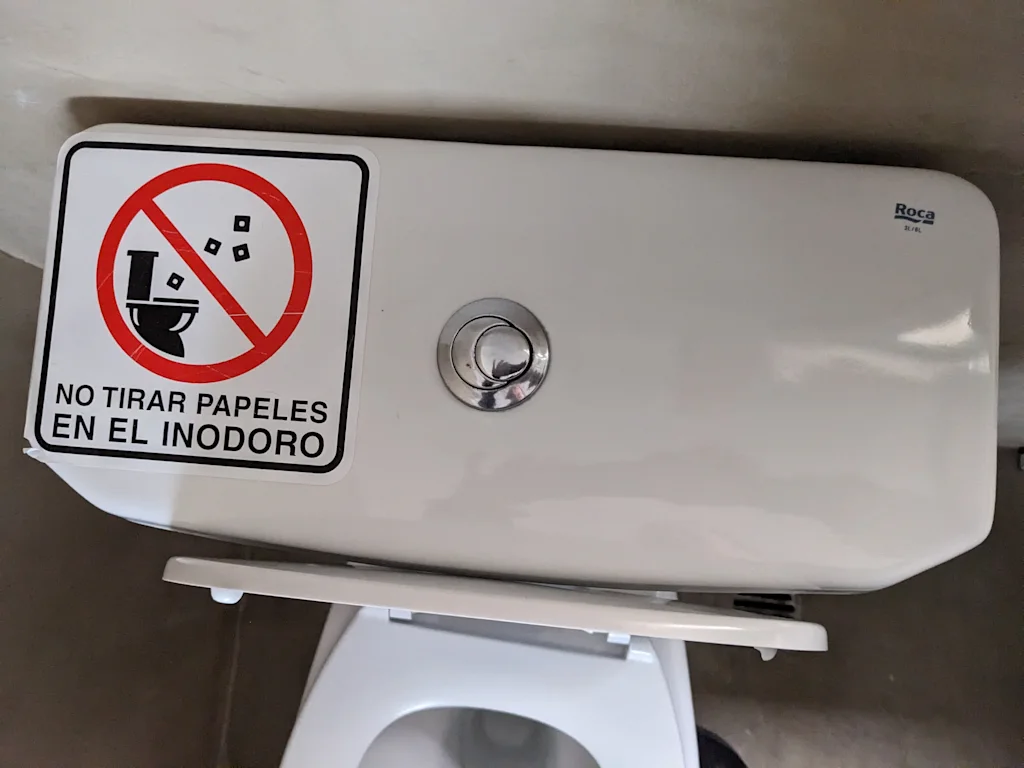
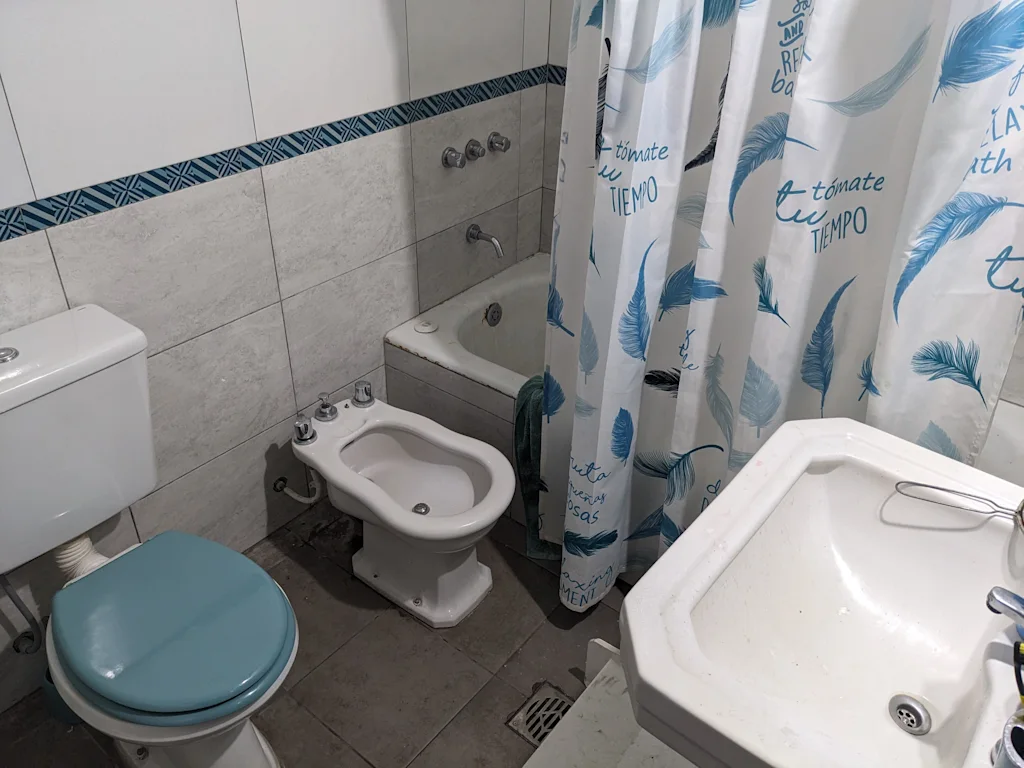
(Above: A sign reminding not to throw anything in the toilet. Our bathroom in our apartment with standard bidet between toilet and tub--makes for a tight bathroom!)
Because the climate is very dry, it makes sense to hang dry clothing- items literally dry in an hour or two most days! It's an easy, but somewhat time consuming task with the girls going through lots of clothes each day and a small washer, we're pretty much always doing laundry. That being said, at our current apartment in Mendoza- going up onto the rooftop is such a beautiful place to be in the fall with the sunshine and mountain views, it's actually become a sort of meditative chore and one that I actually like (when I'm not feeling rushed getting to other tasks in the day...which is often!).
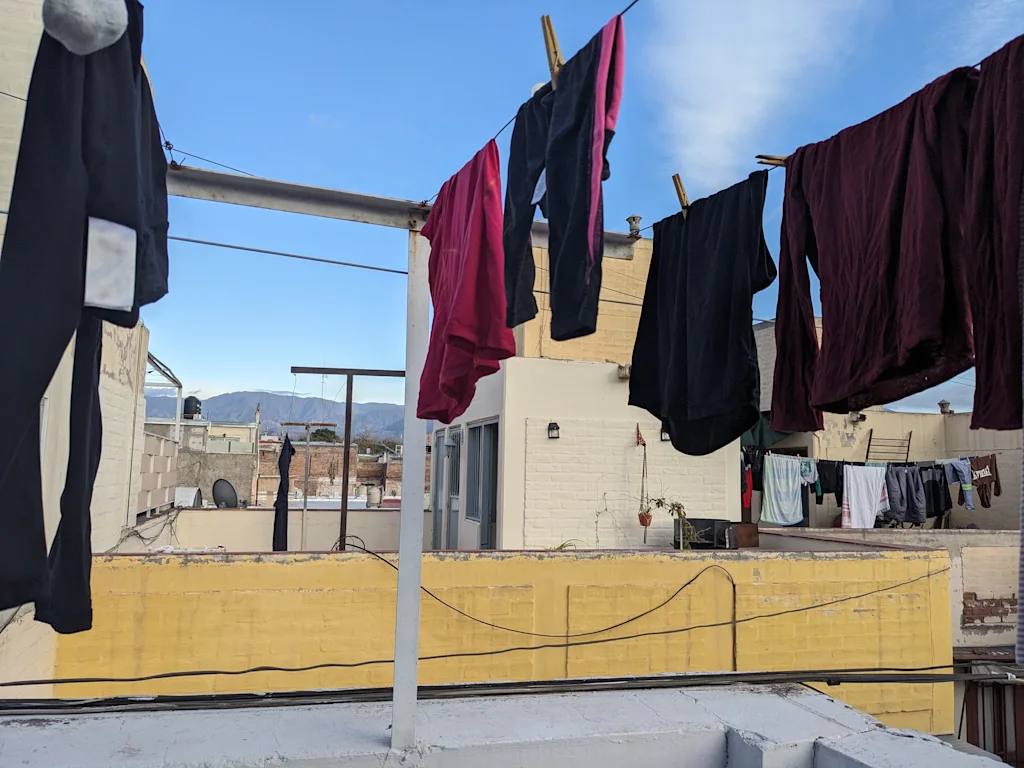
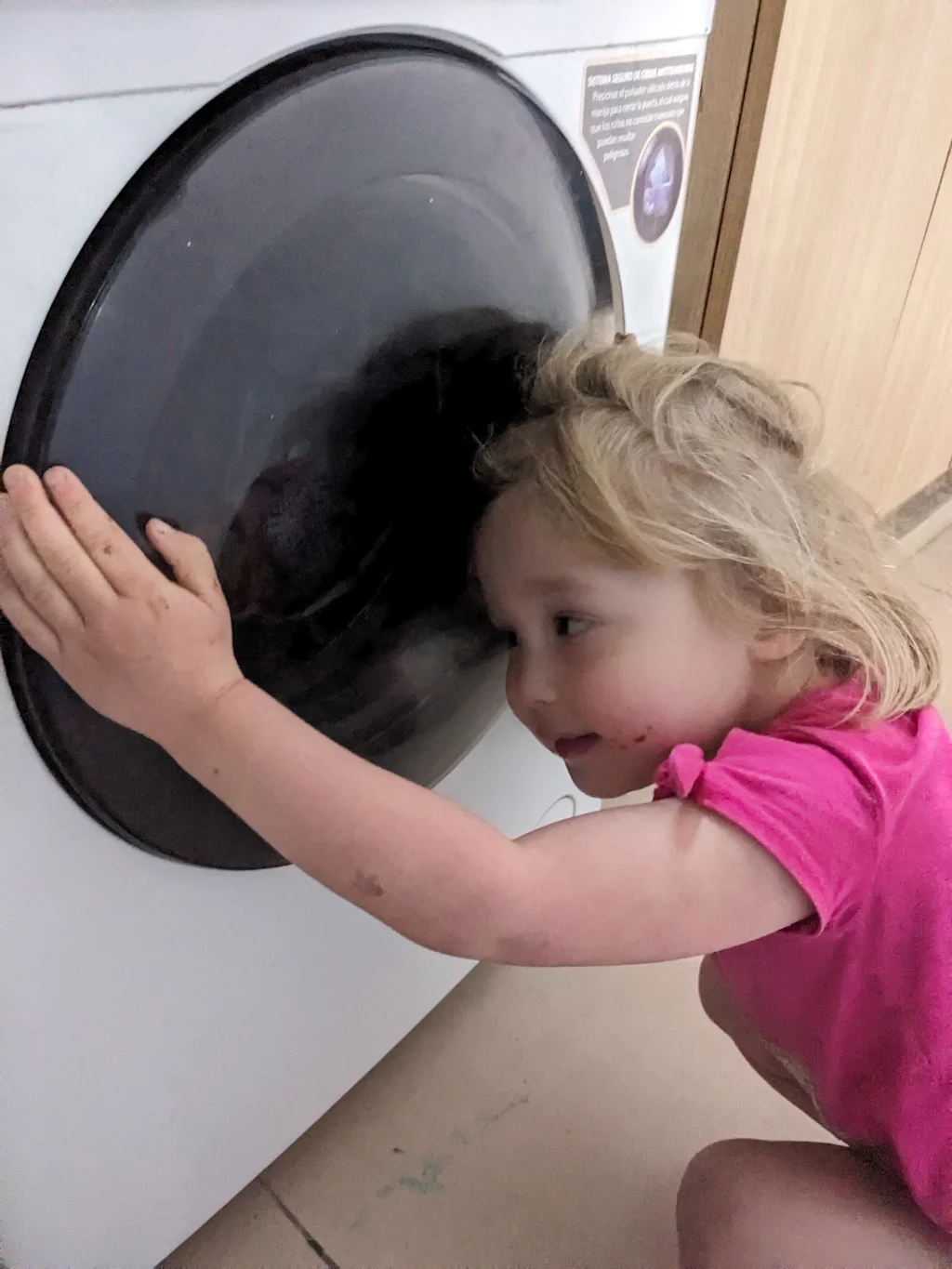
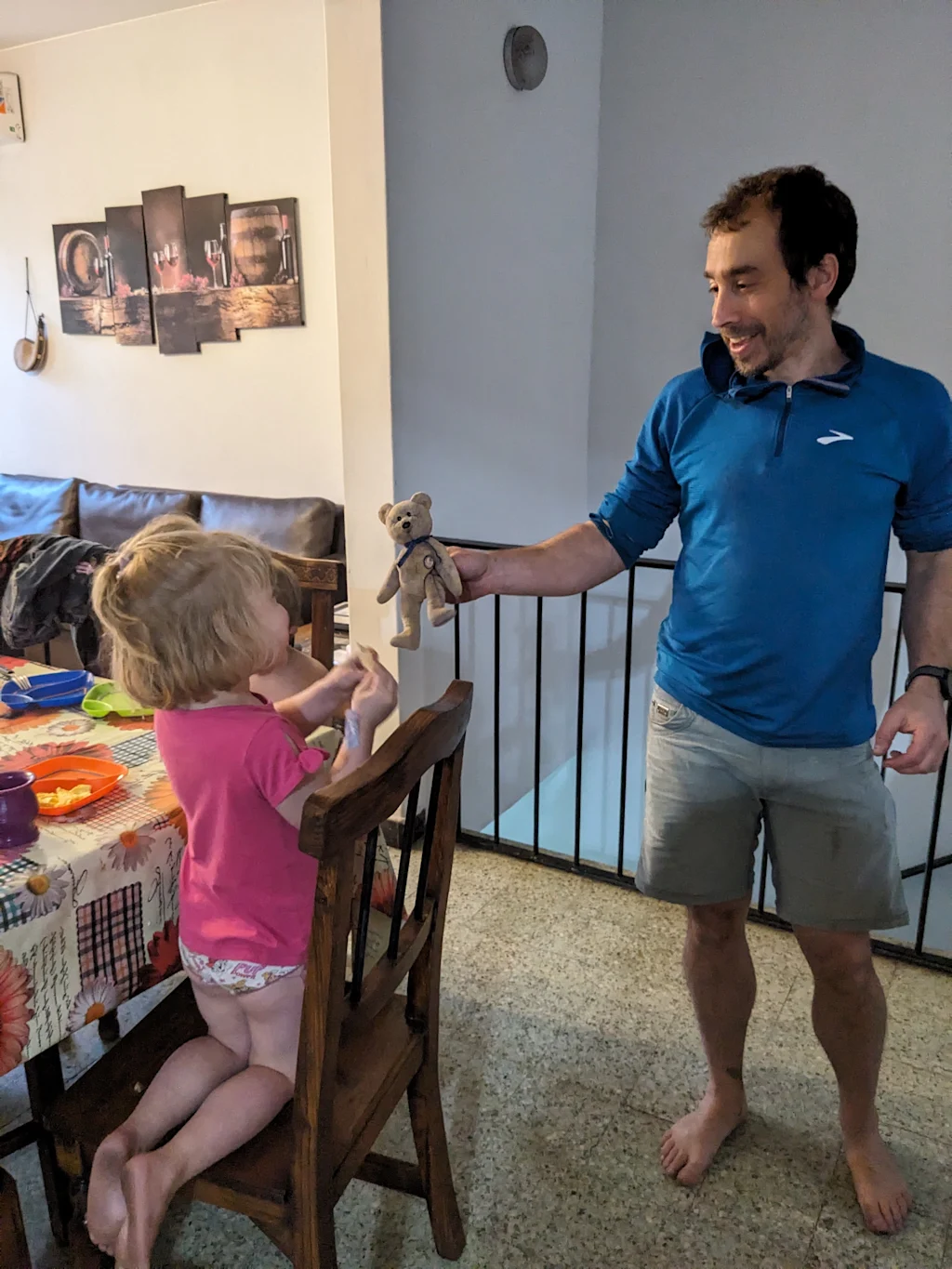
(Above: View from clothes line- so lovely! May watching her beloved "frog one" teddy being washed. She had accidently dropped it off the terrace roof into an awkward space between the stairs and floor below- Eric used his climbing skills to rescue it - hero of the day!)
Health: We've been lucky to have stayed quite healthy with all the travels! We did buy catastrophic travel insurance before our trip to cover any significant health emergencies, and fortunately have not had to use it. The water here is potable everywhere we have traveled, so aside from a few days here and there in the first few weeks, we have avoided any major GI issues (though in general it seems like Argentinians have a very high meat, low fiber diet- but you can get lots of fruits and veggies here!).
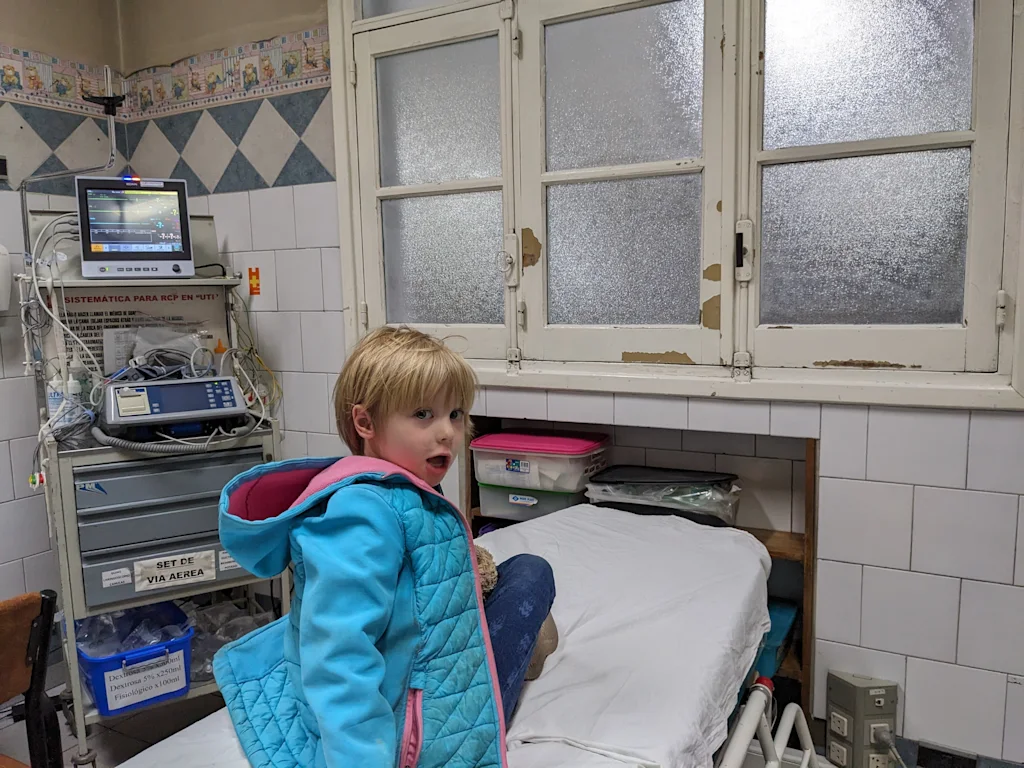
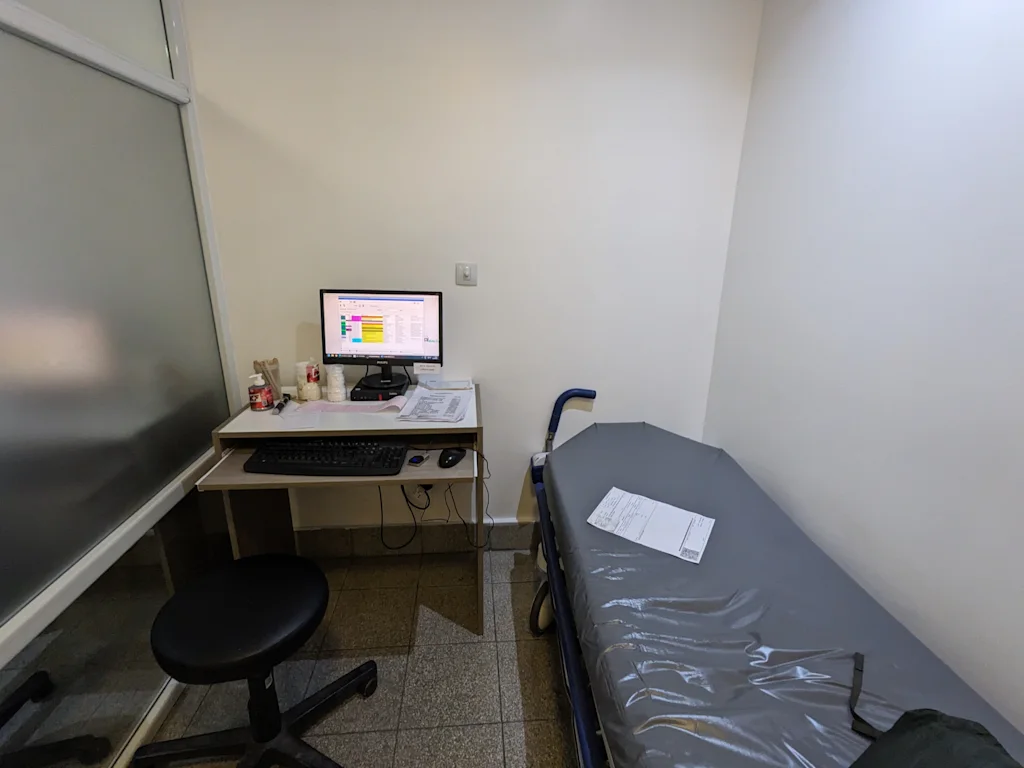
That being said, both Nell and Kate did get a bout of strep throat about 2 weeks into our stay in Mendoza, likely from circulating illness at school. Kate got sick first and though self-diagnosed with classic signs and symptoms, was interested to go to the clinic an experience a healthcare appointment. Because we aren't paying into the national health plan, we have to utilize the private hospitals and clinics here (although would probably would not be turned away from the public clinics). The public system is known for higher quality care, while the private health care system while more expensive is known to provide much quicker service. I was able to go to the urgent care at a private hospital and be seen within about 10 minutes. The exam room was a larger room with curtain outer "walls" and was sparse, but did have a small table for the patient, desk for the provider and some basic instruments. The provider did look in my throat, but otherwise did not touch me and the visit was about 5 minutes long. For $60,000 (about $45 USD) I got my exam and script for amoxicillin which I filled at a local pharmacy for about $20,000 (10 day Rx). I was happy with the efficient and for me at least, relatively inexpensive care. But again, for any local would be quite pricey. Nell's experience was similar, though the pediatrician made very little effort to even visualize her tonsils and did not further exam, largely basing her diagnosis off my report, which was valid- but more hands off than we typically see in the states. The visit was efficient though! And we were both recovered and feeling so much better after a few days.
Eric and I have both been trying to maintain some fitness routine. Eric enjoys running 2-3 days a week and then has also brought his own exercise bands for resistance training. Being able to exercise on our roof is a real plus! I found a boxing and "functional fitness" gym our second week in town just a few blocks away, a 12 class pass is $32,000 (about $28 USD), and I've been going 3 times per week. It's been a fun (and new!) way to stay in shape and hear Spanish in a different context!
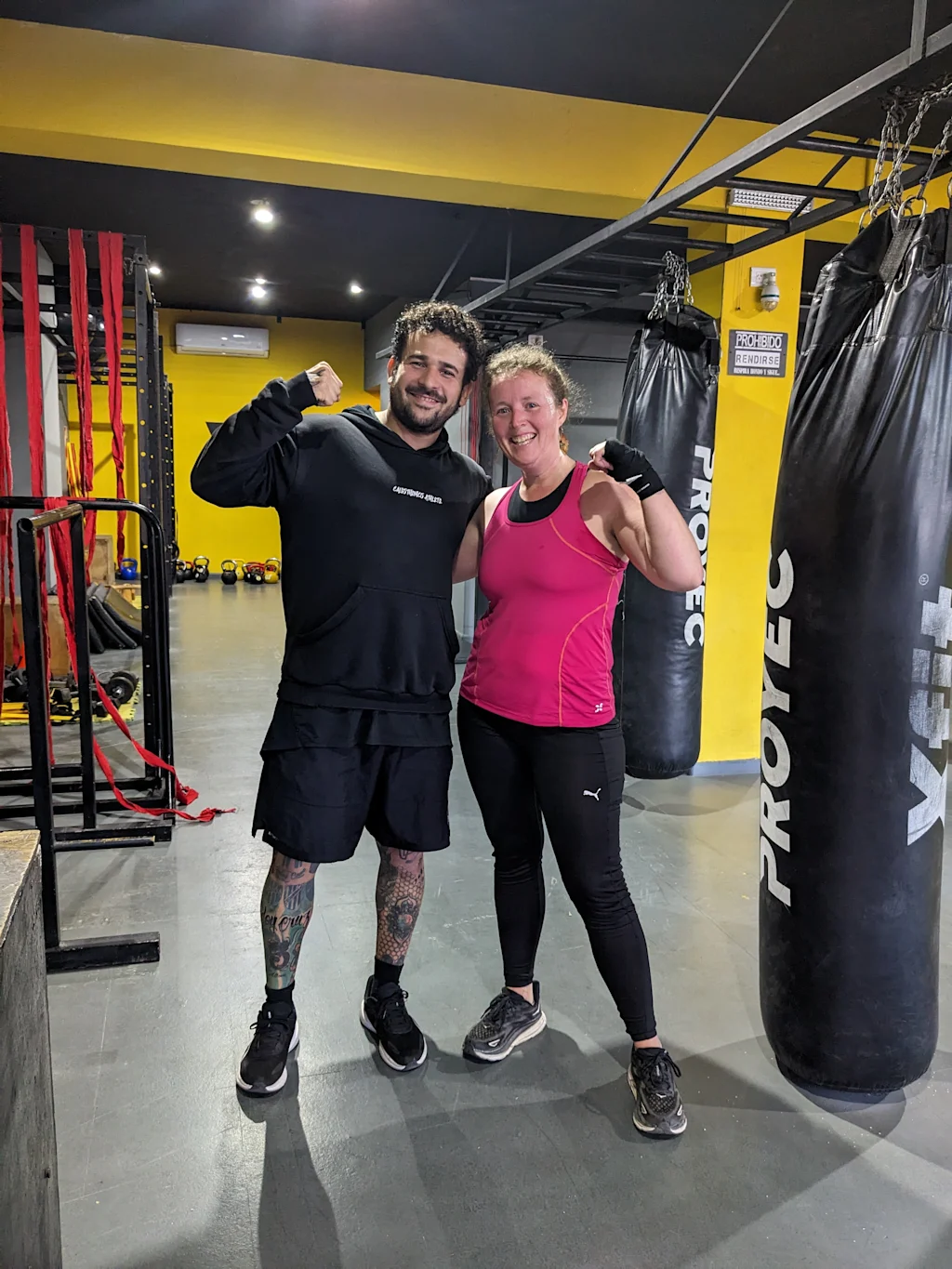
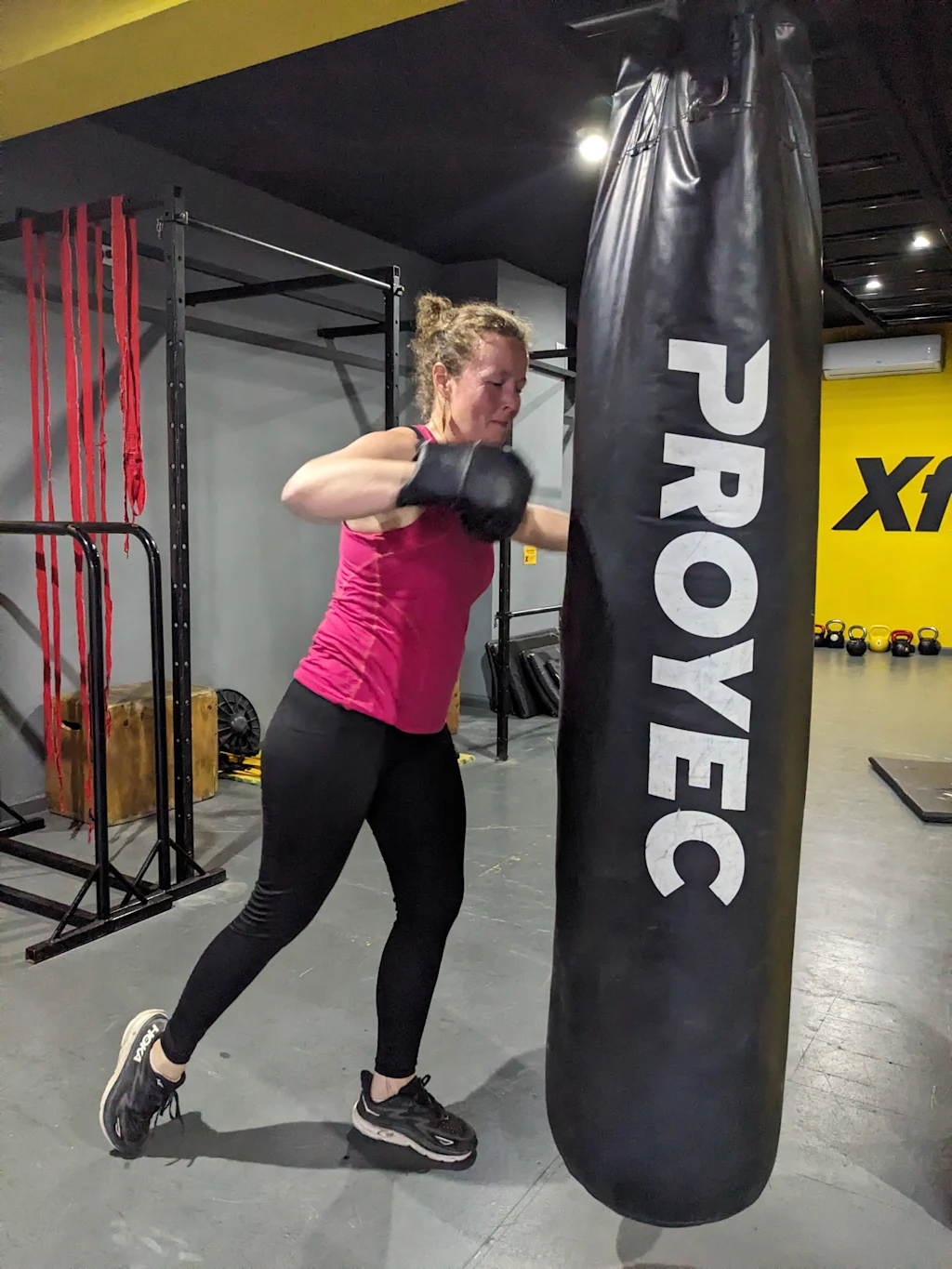
(Above: Nell gets checked for strep throat. Kate's urgent care exam room. Kate gets her frustrations and stressors out at the X-Fit gym- highly recommend! Yerko was a great coach!)
Activities: Mostly we have kept occupied with visiting the various playgrounds the city has to offer and going further afield on weekends when we've rented a car or paid for a taxi ride.
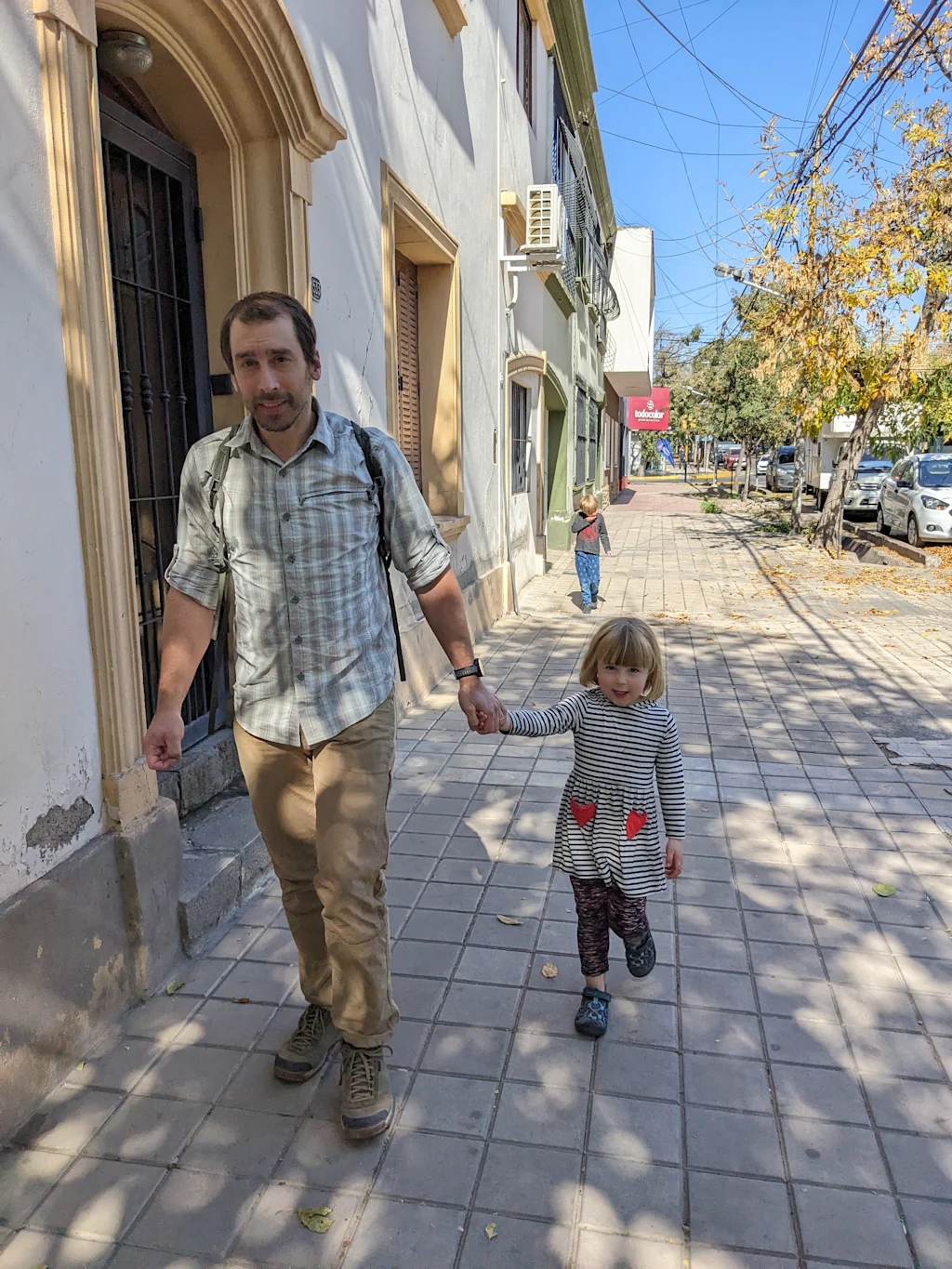
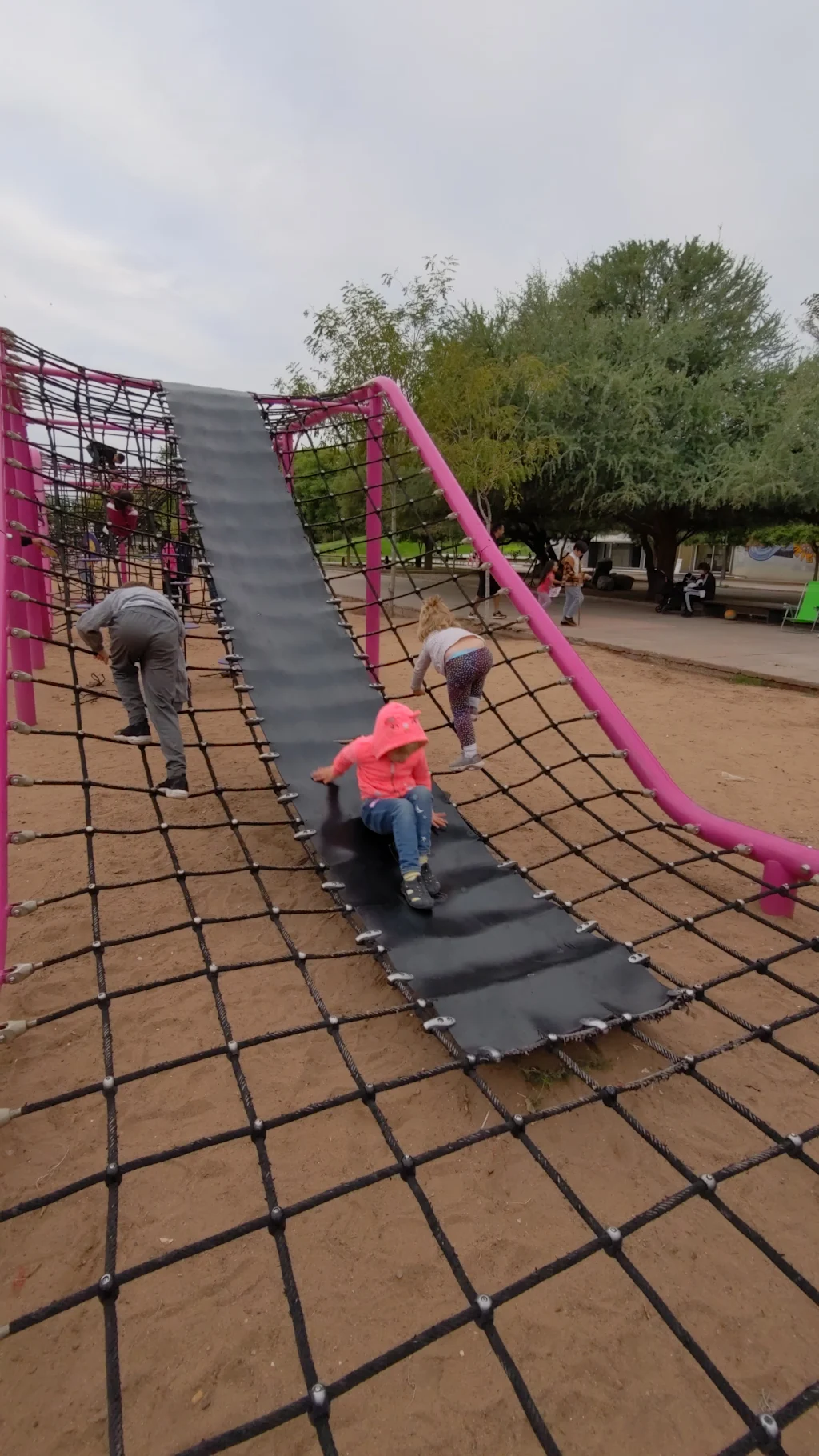
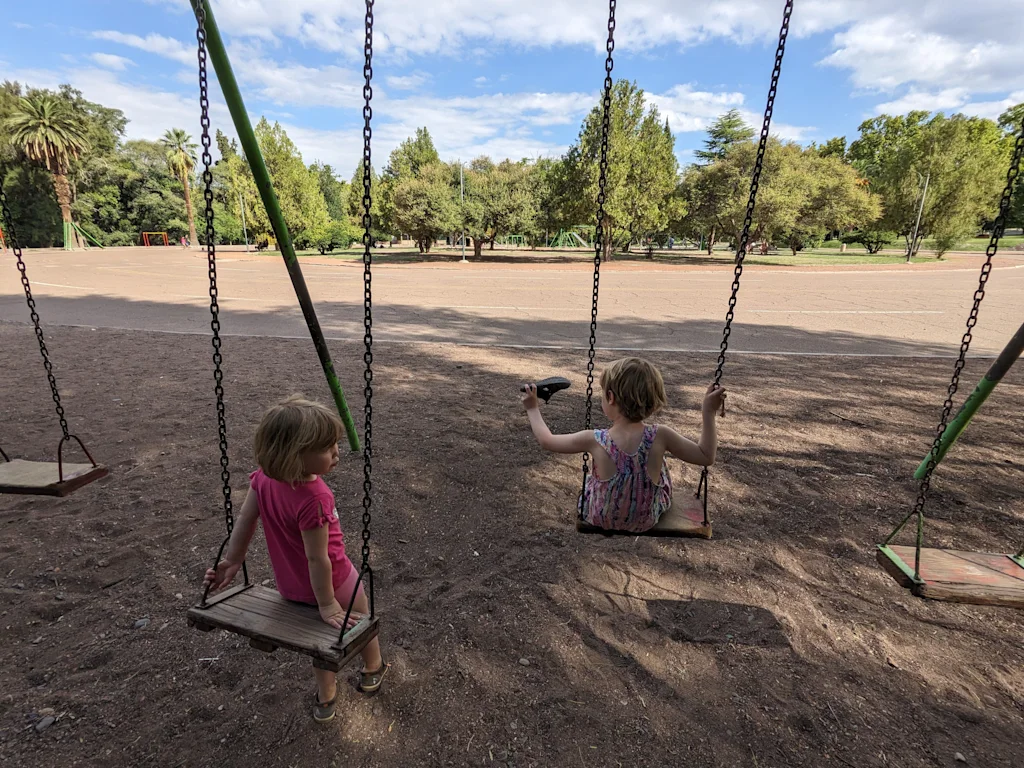
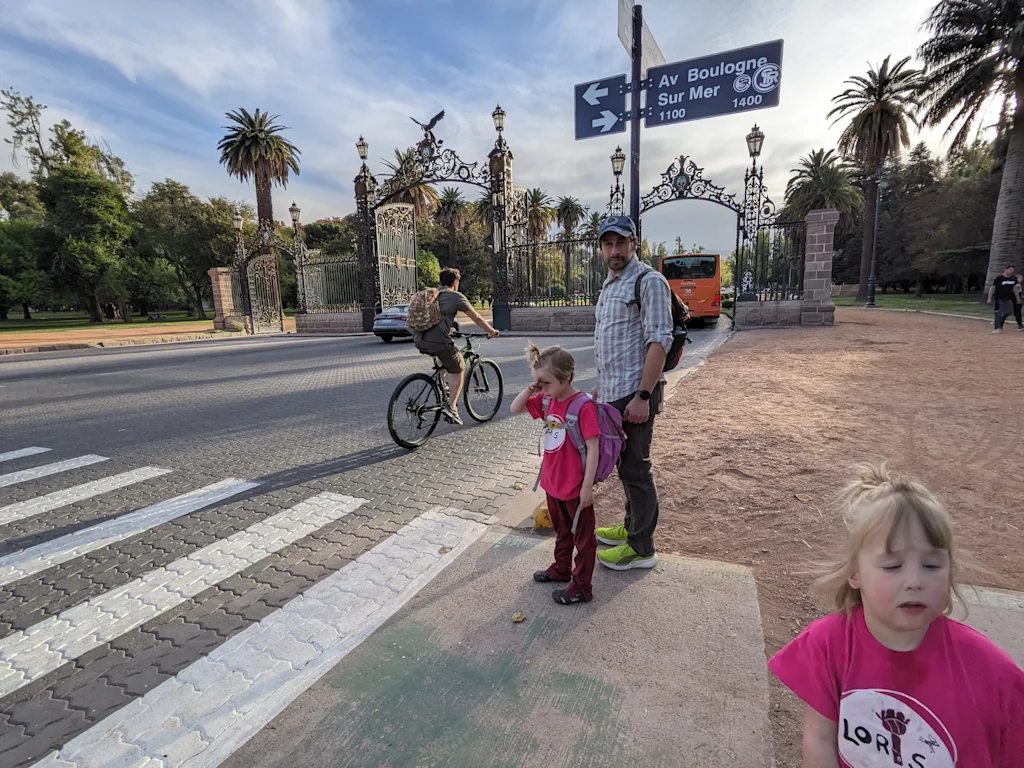
After school days we have tried to navigate getting the girls enough "big-body movement" play time (i.e. outdoor play on playgrounds) versus respecting that they are often at least mentally exhausted after a long day at school and just want to come home and watch TV for a bit. We don't usually have too much time after the walk home from school before it's time for dinner, bath and bedtime so we just play each day by ear. Sometimes we get the calculation right, but I'd say about 50% of the time there is some sort of meltdown or power struggle by bath- time. Though in hindsight, it has gotten better in the past few weeks. There were a few weeks about 2-3 weeks into our stay here that it wasn't uncommon that after getting in bed the girls were so wound up and bonkers that we literally had to get clothes and shoes on to take a calming walk around the block. It wasn't that they weren't tired, really, but that they were over-tired and they don't have the skills to calm down. This taking a short walk was pretty easy and feasible because it was still warm and somewhat light outside, we just had to put on shoes (with PJs) and walk out the door. And while meant to be a tool for us, as well as training for them in ways to regulate the body before bedtime, by now (unfortunately) it has become more of a threat to them, when we offer to take a walk it they (kind of) try to find ways to calm down without having to do so, not really wanting to leave the room for outside at bedtime.
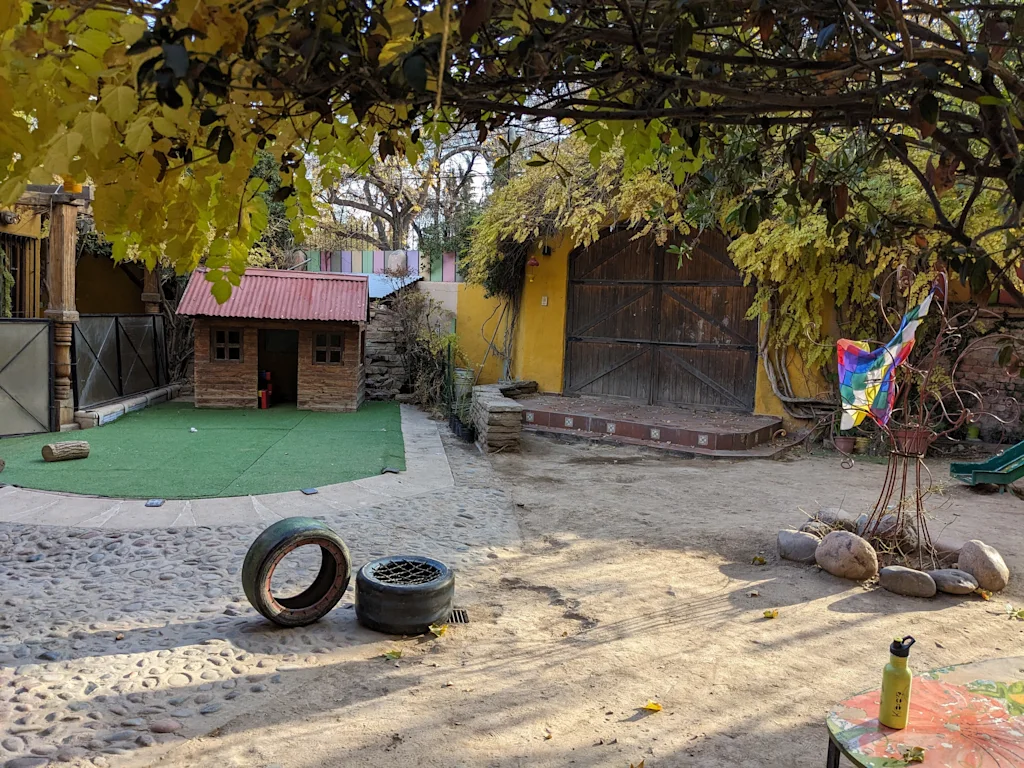
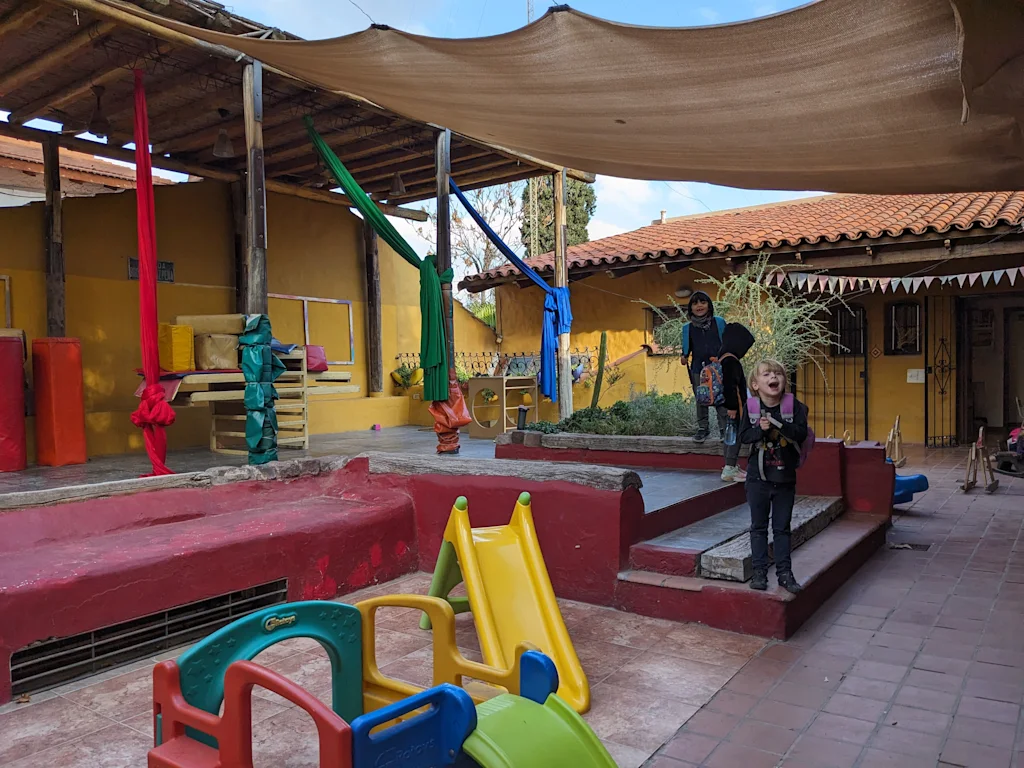
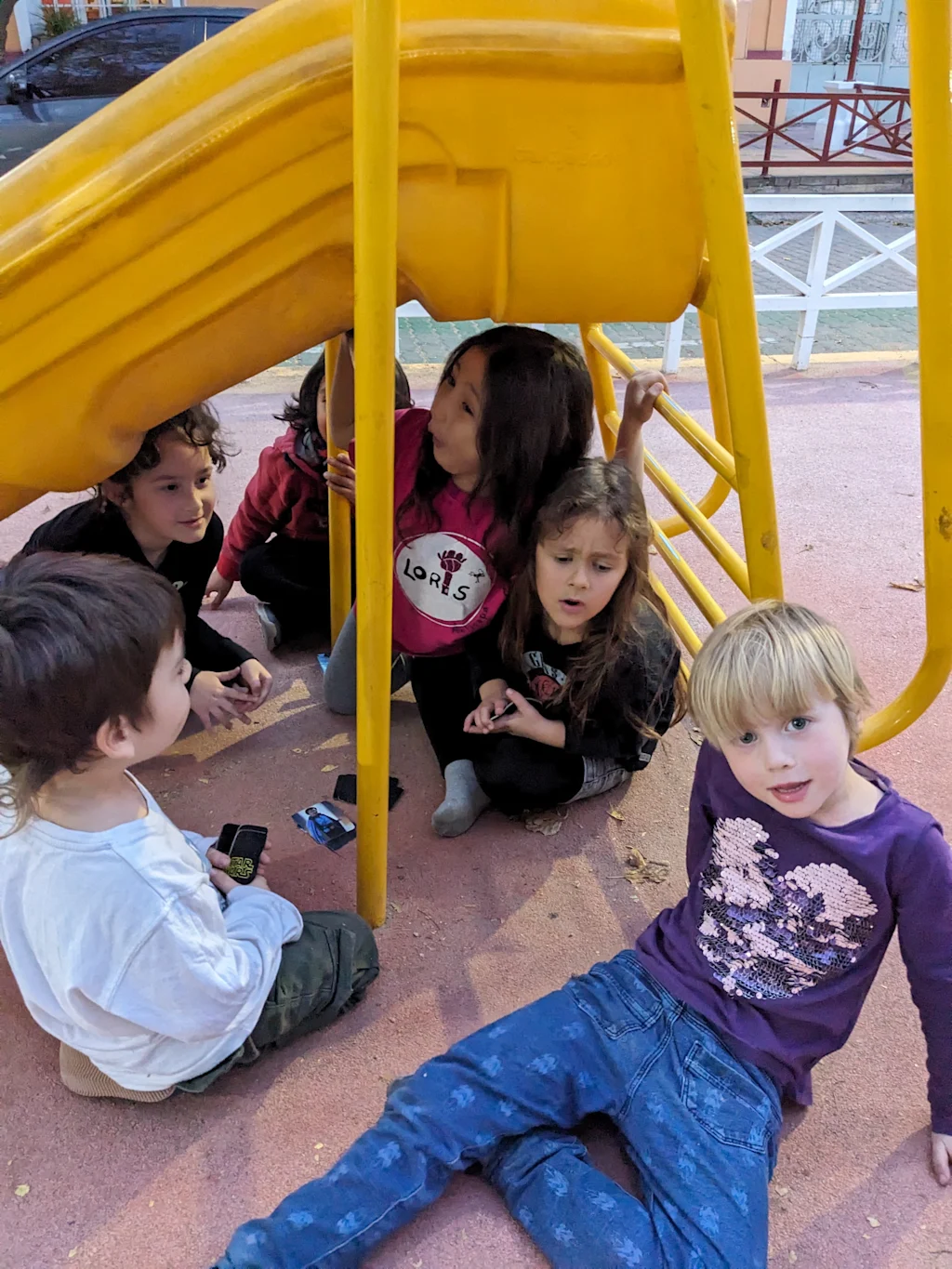
(Above: Beautiful patio spaces at the girl's school, but no big play structure or field. Yellow playground after school with classmates)
Parenting Nell and Mae ages 3 and 5 who are both full of energy is a constant lesson in patience. We also know they are doing a really big thing moving away and spending full days immersed in Spanish and making all new friends while being in a totally new schooling environment. I am proud of how they are doing! AND we are often all exhausted (hence why these posts have come so late during our time here). Even with all of our resources and being on this chosen adventure, parenting is still challenging.
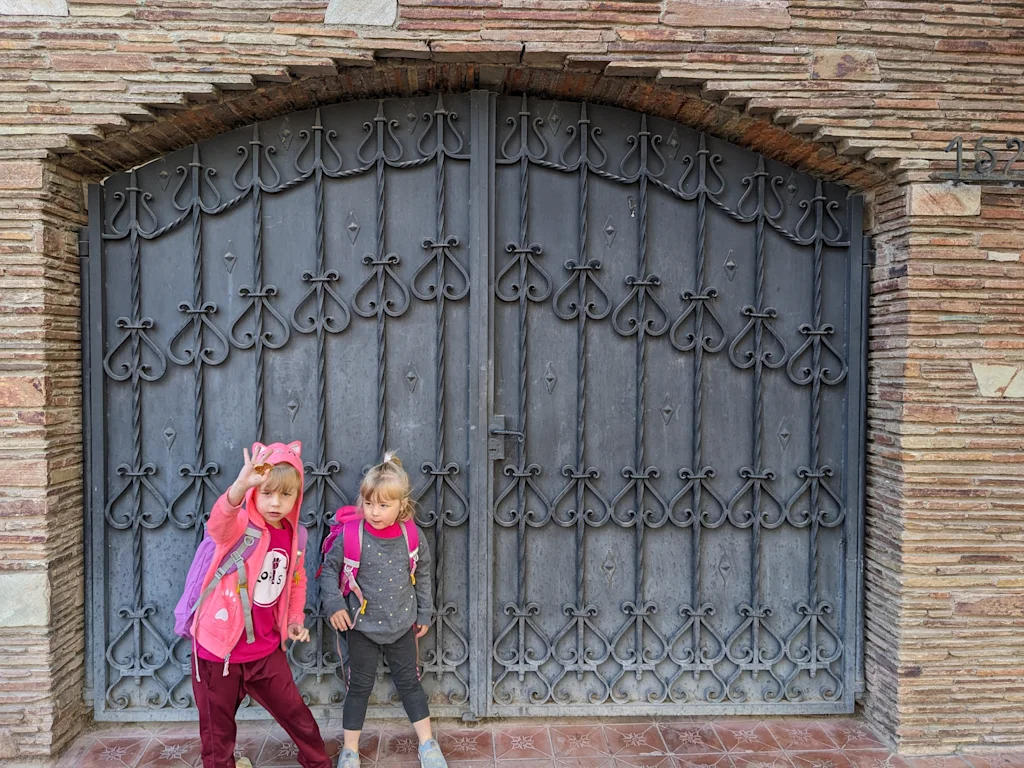
During some quieter moments and down time, I have appreciated seeing the girl's creative side come out. And Nell's drawing and art work keeps developing! We have tried to nurture this through always having some basic art supplies around (markers, paint, paper, scissors, glue, tape) and are happy to let both girls do painting in the park whenever we see that in the plaza (costs $1000-$2,000 pesos) or get their faces painted- they love it so much!
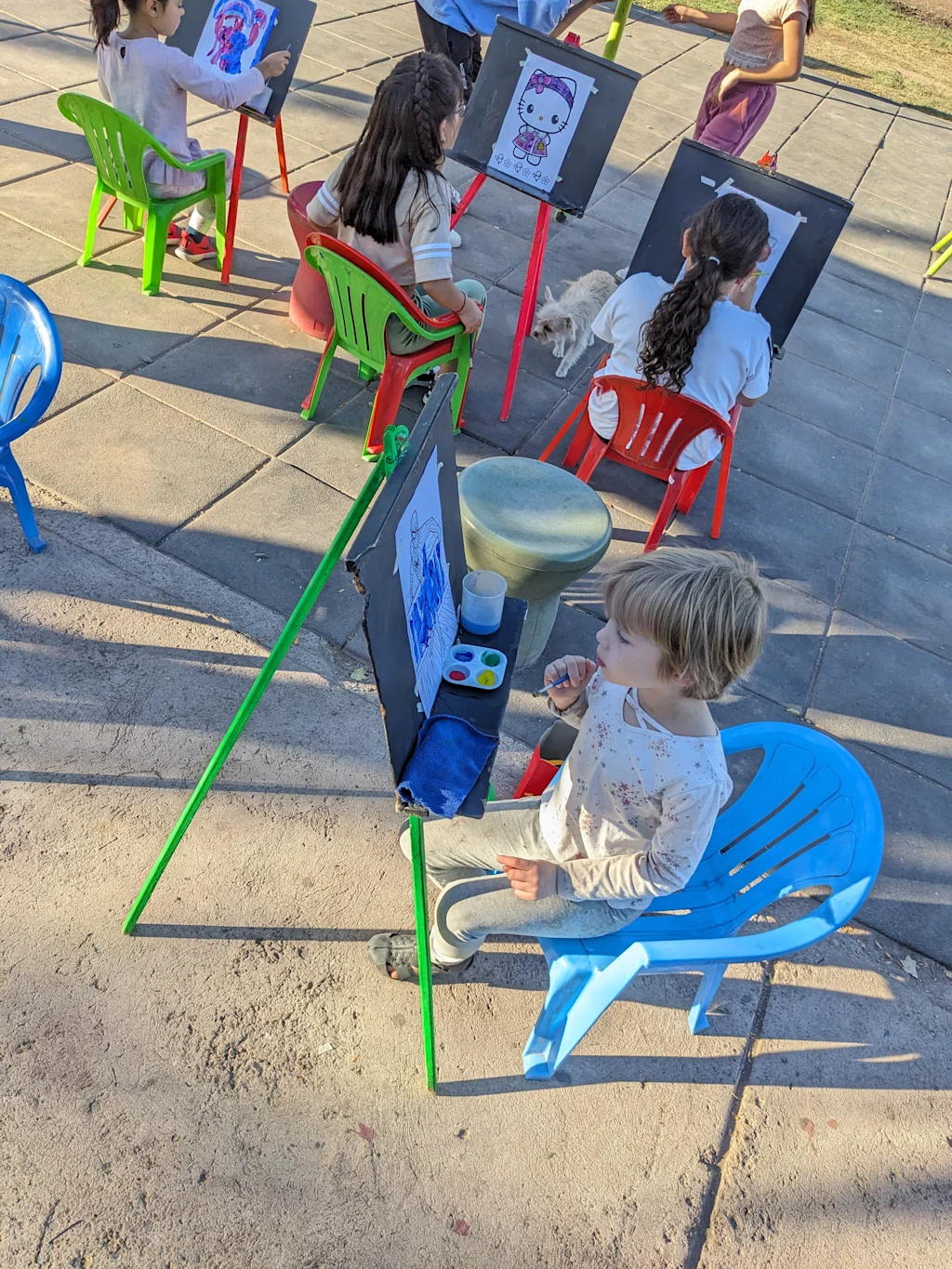
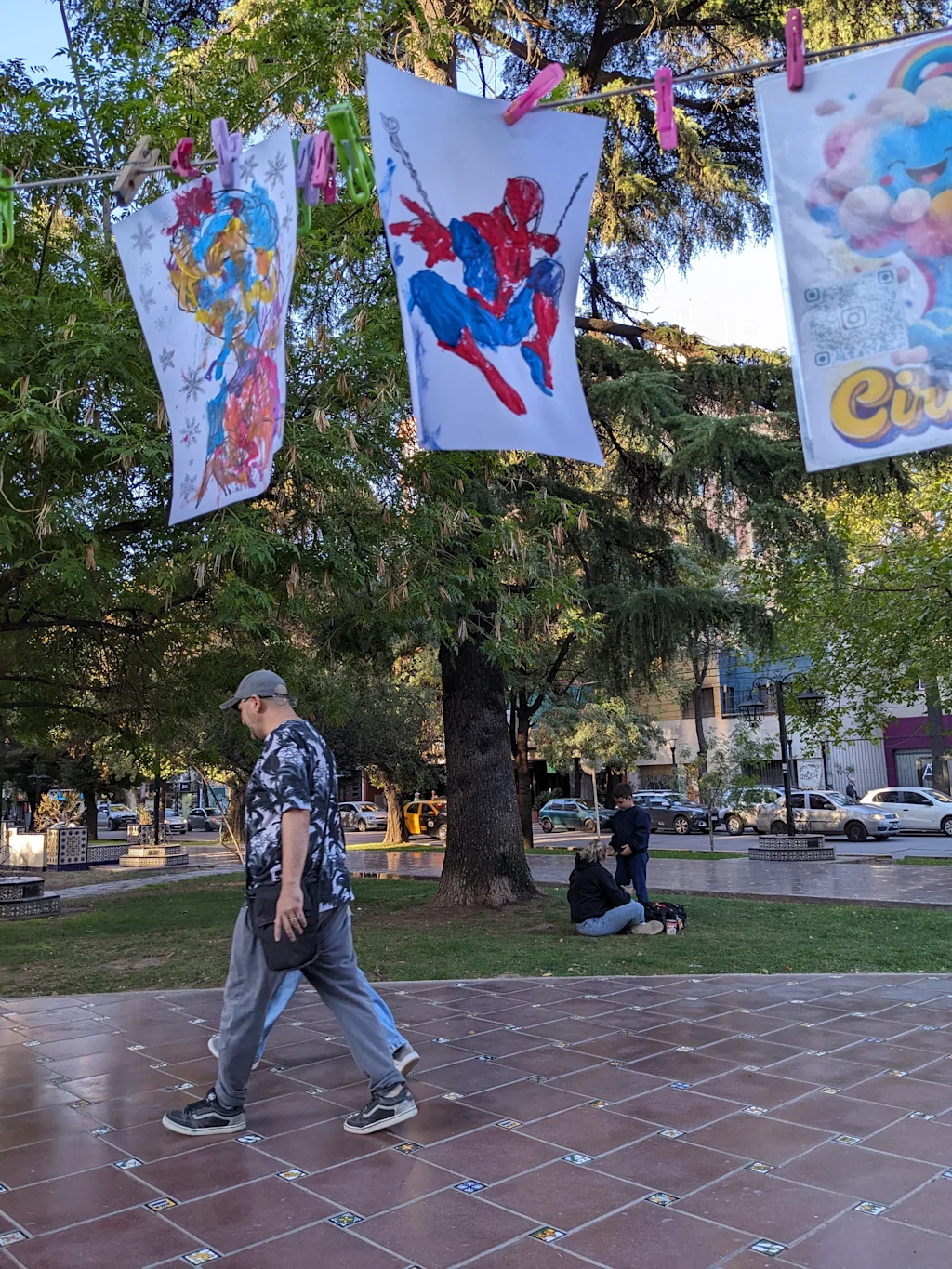
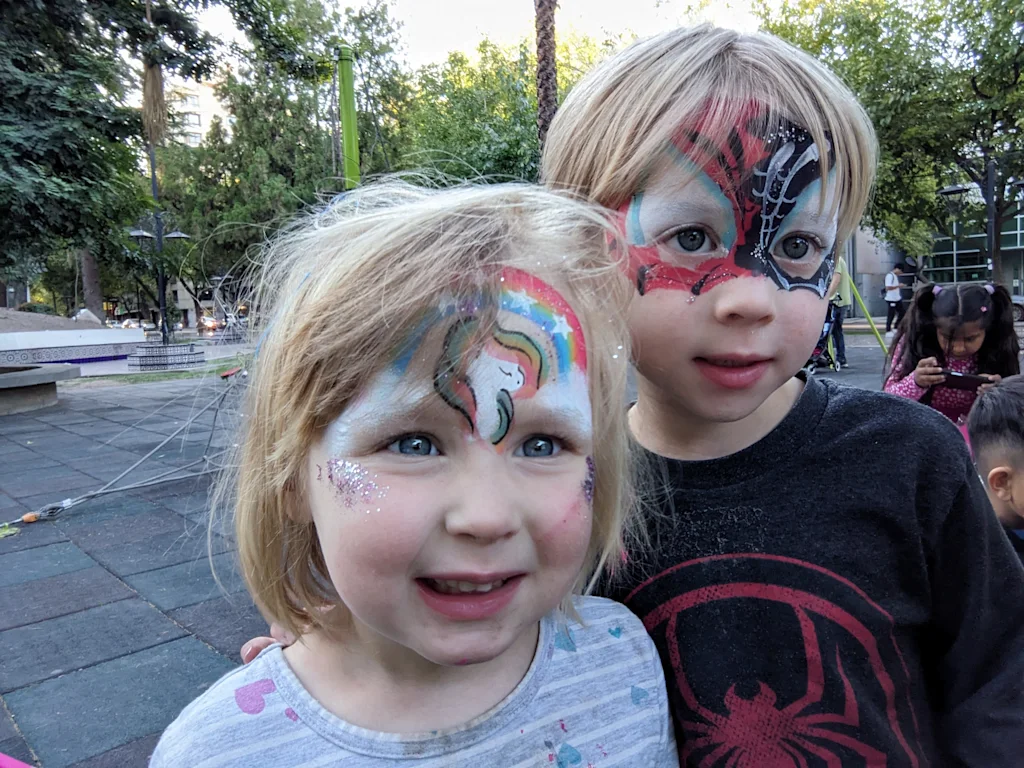
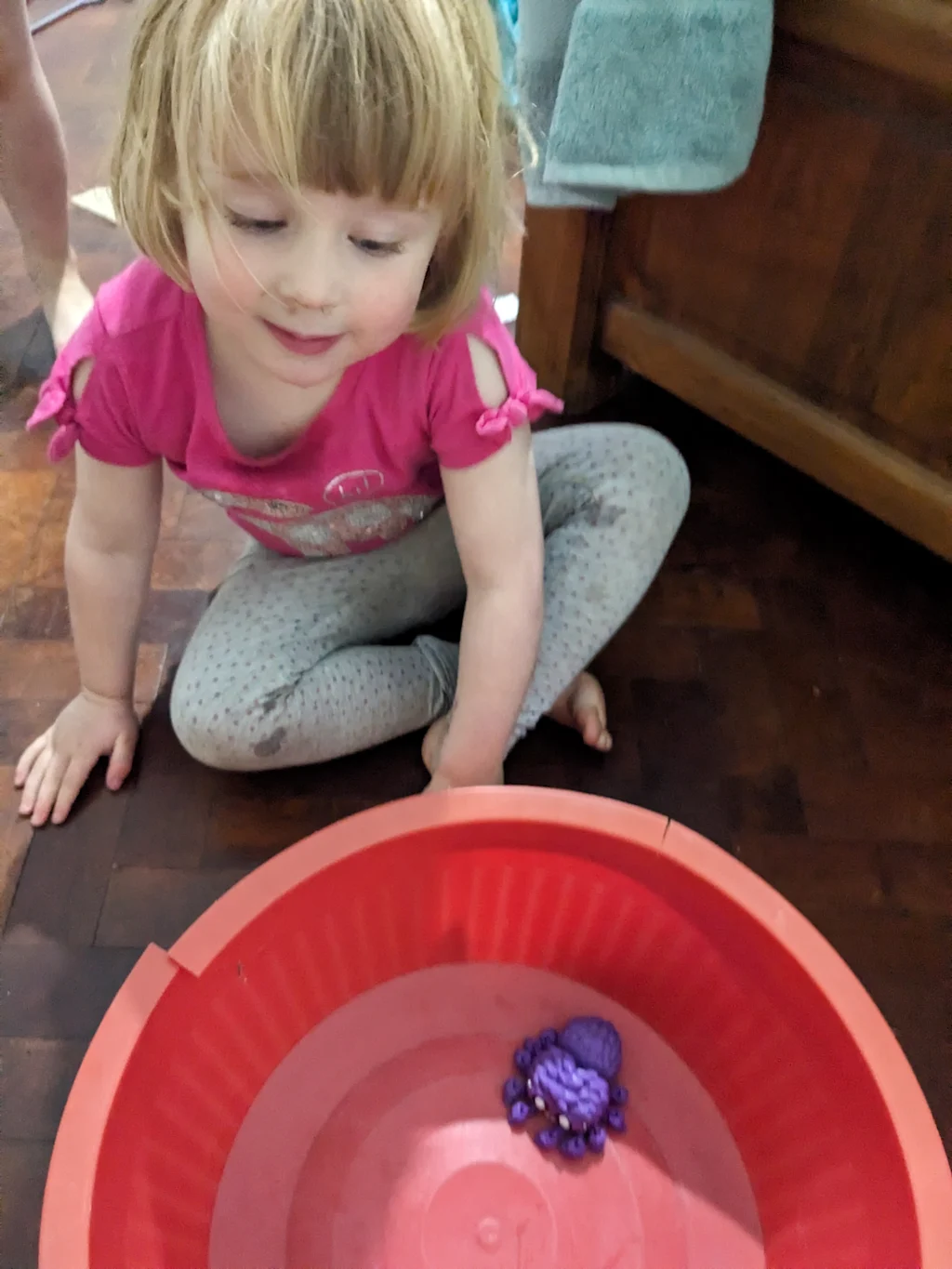
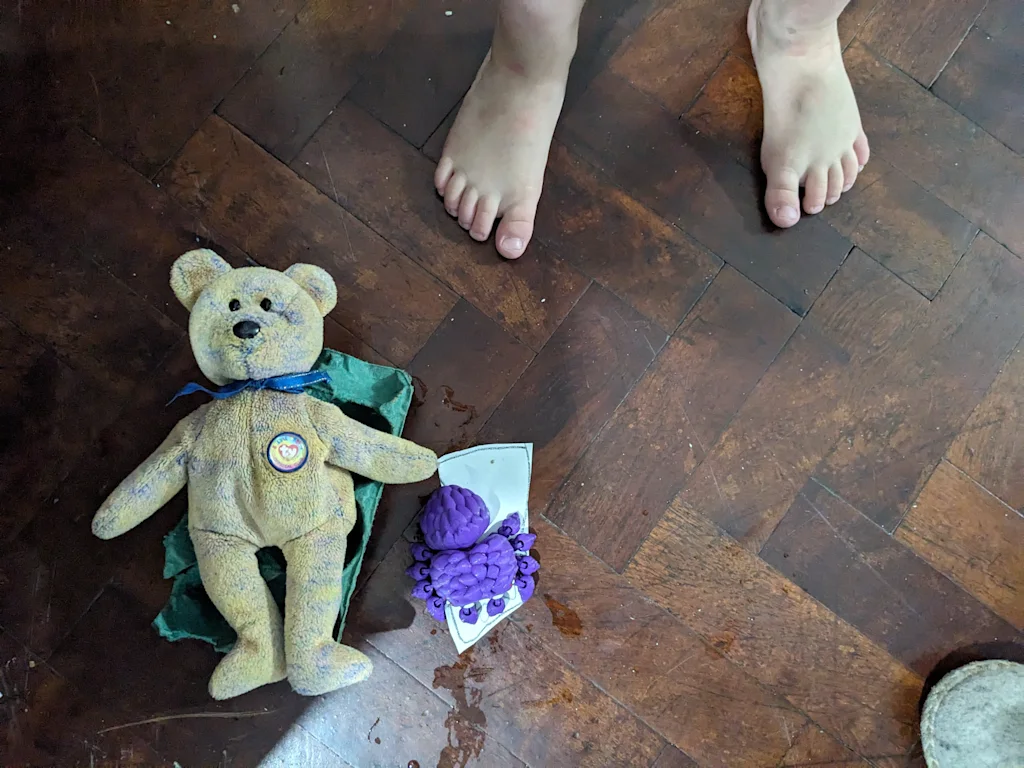
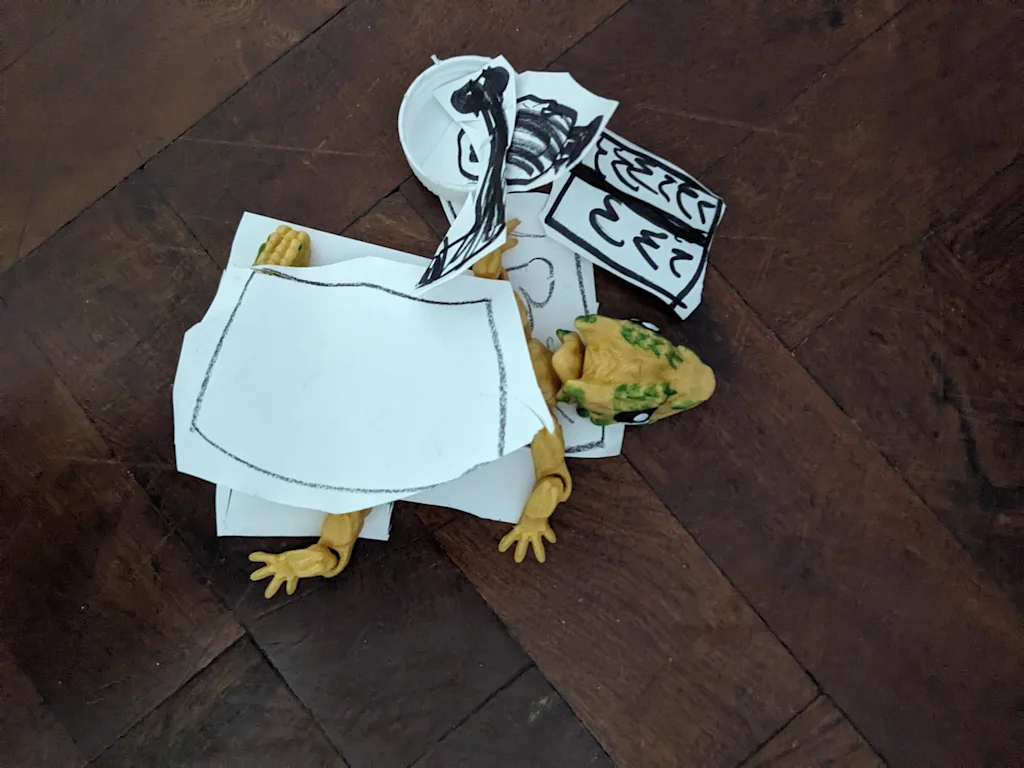
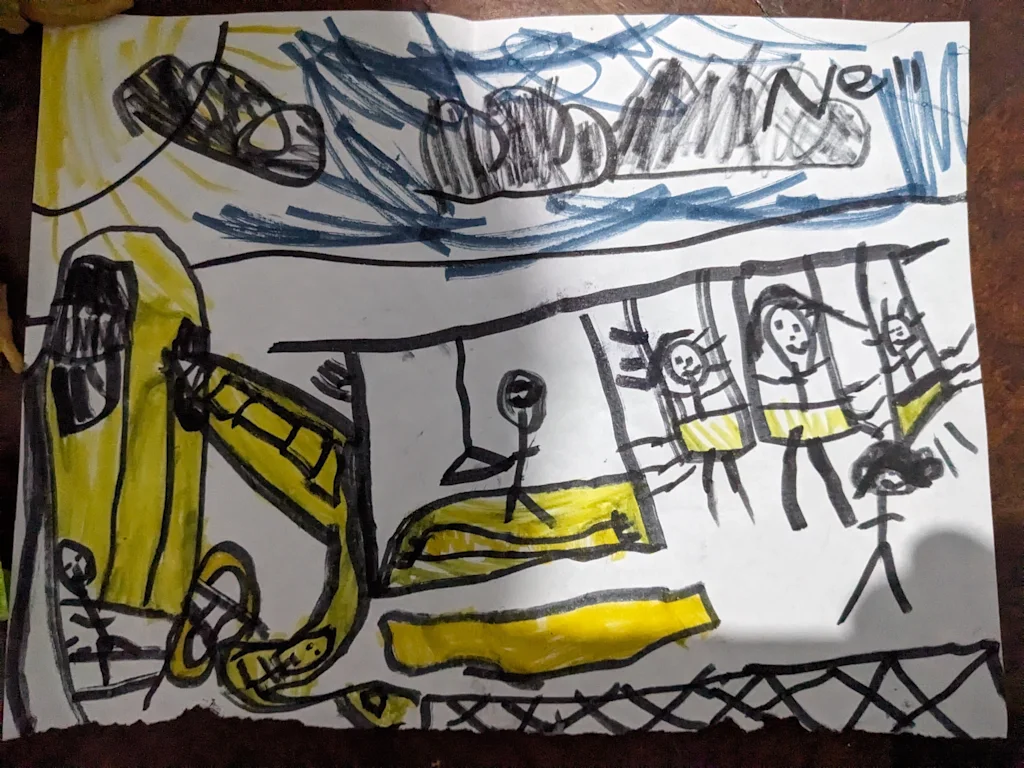
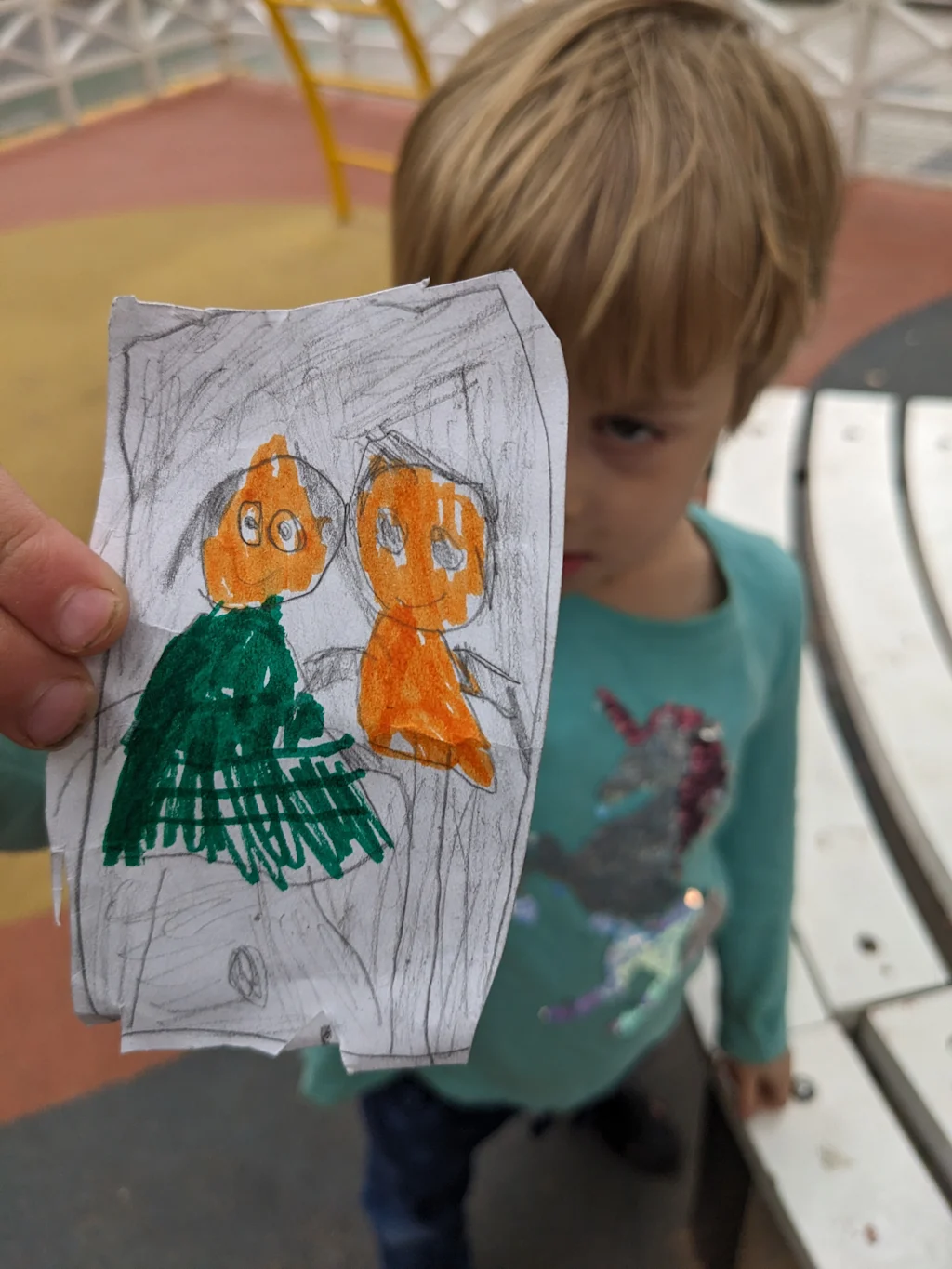
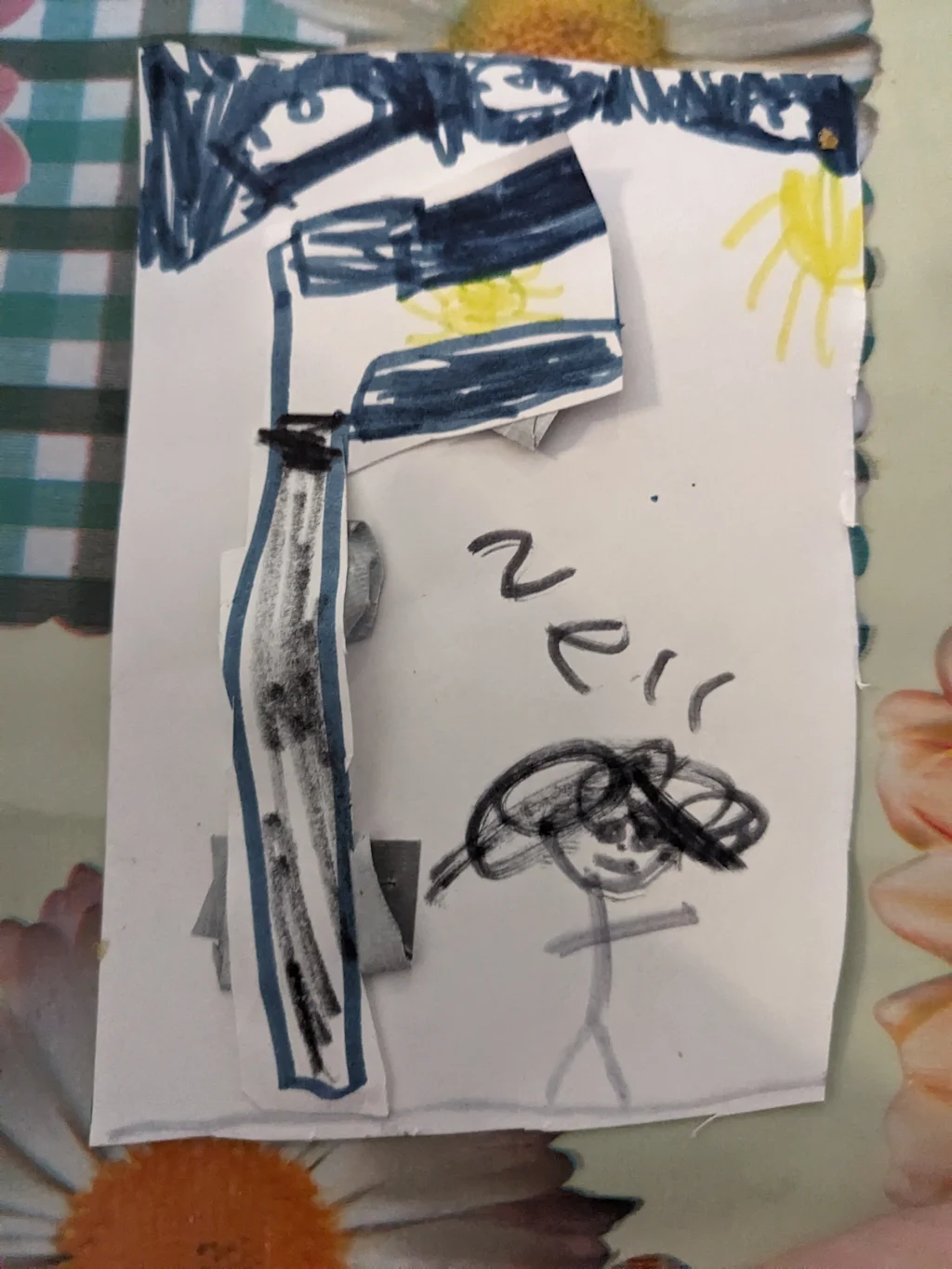
(Above: Painting and face painting in the local plaza park. Nell and Mae play creatively with their toys. Nell likes to make cut out things for her toys- like the bed, blanket and pillow she made for her lizard, and Mae enjoys copying her. Nell's drawing is so fun too! Here you see her rendition of the yellow playground with twisty slide and swings, her version of her own cell phone with Grandma & Grandpa on it, and picture of her standing next to the Argentina flag. So freakin' amazing and cute!)
And just like that- our 11 weeks here have gone by! We are literally leaving Mendoza TOMORROW. But I still have a bit more to share including some highlights (and lowlights) of our time here....stay tuned!